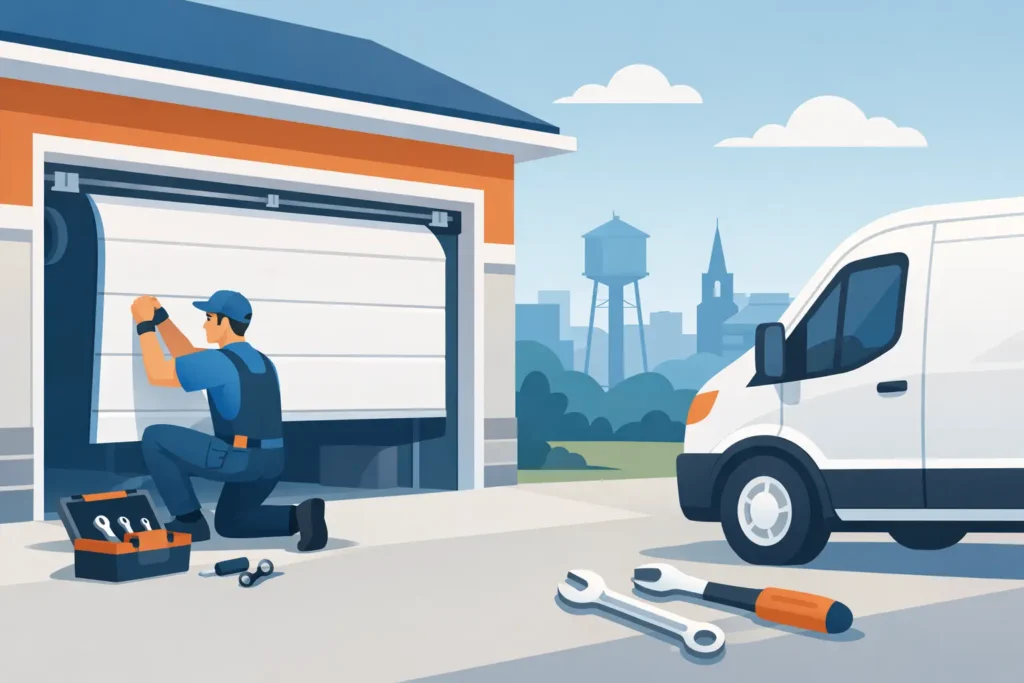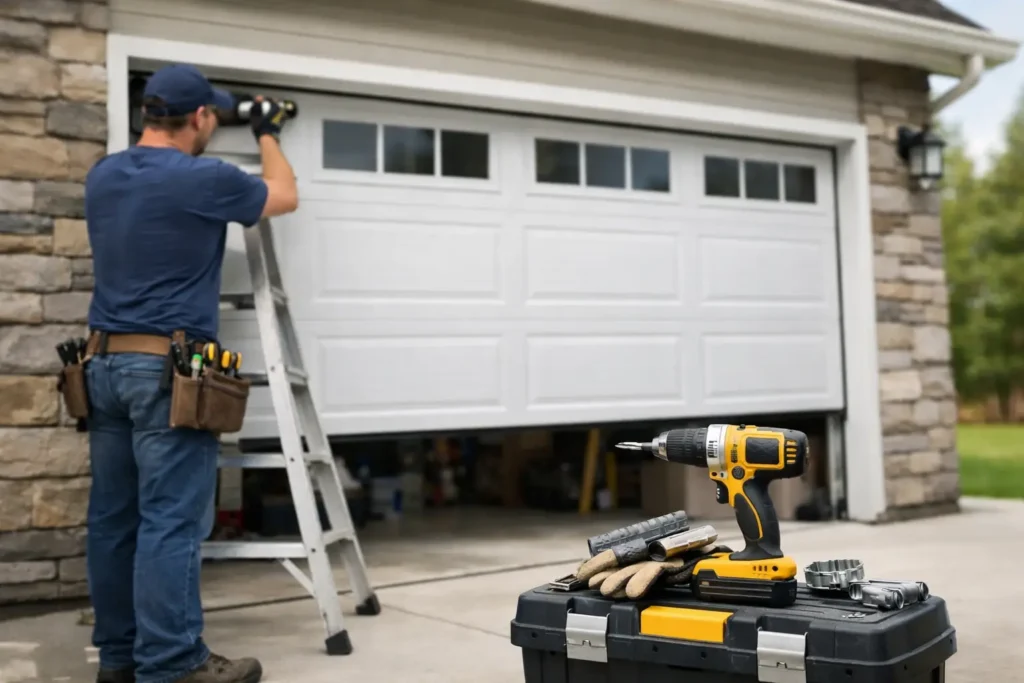
A garage door off track is more than an inconvenience at the end of the driveway. When rollers leave the track, the door can hang unevenly, jam halfway, strain the opener, or become unstable enough to fall. If your door looks crooked, makes grinding sounds, or will not open and close normally, stop using it and have the system inspected before the damage gets worse.
Why a Garage Door Goes Off Track
Your garage door moves on a carefully balanced system of rollers, tracks, cables, springs, hinges, and brackets. The tracks guide the door, but they do not carry all of its weight. When one component fails or gets knocked out of position, a roller can climb out of the track and pull the rest of the door out of alignment.
A vehicle bumping the bottom section is one of the most obvious causes. It does not take a major collision to bend a vertical track, loosen a mounting bracket, or damage a roller. A ball, trash can, lawn equipment, or other object caught beneath a closing door can create a similar problem.
Worn rollers are another common cause. Steel rollers can rust, nylon rollers can crack, and bearings can seize after years of use. Instead of moving smoothly through the curved section of track, a worn roller may bind, jump, or force the track outward. In northwest Ohio, changing temperatures, moisture, road salt, and seasonal debris can speed up wear on exposed garage door hardware.
Broken or loose lift cables also put a door at risk. A cable may come off its drum after a spring problem, a damaged bottom bracket, or an obstruction during operation. Once one side loses cable tension, the door can rise unevenly and pull rollers out of their tracks. This is a serious repair because garage door springs and cables are under significant tension.
Track damage, loose lag bolts, worn hinges, and an unbalanced door can all contribute as well. Sometimes the visible roller that has come out of the track is the result, not the original cause. A professional inspection should identify the failure behind the failure, so the same issue does not return a few days later.
Signs Your Garage Door Is Off Track
A fully derailed door is easy to spot, but early warning signs are often less obvious. You may see a roller sitting outside the track, a gap between a roller and the rail, or a door section that hangs lower on one side. The door may stop at an angle or leave an uneven gap along the floor.
Sound also matters. Scraping metal, popping, grinding, or a loud bang during operation should never be ignored. A healthy garage door has some normal operating sound, but it should travel steadily without sudden jerks or resistance.
You may also notice that the opener runs while the door barely moves, reverses unexpectedly, or struggles to lift the door. Do not assume the opener is the only problem. Continuing to run an opener against a jammed or crooked door can strip gears, bend the rail, damage the door panels, and create a larger repair.
What to Do When the Door Comes Off Its Track
The safest first step is simple: stop operating the door. Do not press the wall button again to see whether it will straighten itself out. Garage doors do not self-correct when a roller is out of place, and another cycle can turn a manageable repair into a damaged door or failed opener.
If the door is partially open, keep people, pets, and vehicles away from the opening. Do not stand beneath the door, pull on the sections, or attempt to force it down. An uneven door may be supported by only one cable, one track, or the opener arm. That support can fail without warning.
Take these practical precautions while you wait for service:
- Disconnect the opener only if the door is fully closed and you can do so without pulling on a damaged door.
- Leave the door in its current position if it is open, crooked, or visibly unsupported.
- Avoid loosening track brackets, bottom fixtures, cables, or spring hardware.
- Use another entrance to the home and keep the garage area clear until a technician arrives.
If the garage is your only secure entry point, tell the service company that the door is stuck open or cannot be safely closed. That detail helps the dispatcher prioritize the situation appropriately.
Why DIY Track Repairs Can Be Risky
It is tempting to search for a quick fix, loosen a track, and push the roller back in. That approach may work on a lightweight door with no cable or spring damage, but it is hard for a homeowner to confirm that those dangerous conditions are not present. The door may look like a track issue while a cable is slipping or a spring is failing behind the scenes.
The bottom brackets deserve special caution. They connect to the lift cables, which carry the force created by the springs. Removing or loosening those brackets without the right tools and training can cause sudden cable movement or severe injury. The same is true of torsion spring hardware above the door.
A qualified garage door technician can secure the door before working on it, reset rollers correctly, inspect the tracks for bends and spacing, check cable routing, and test the balance after repairs. If a track is bent beyond reliable adjustment, replacement may be the safer long-term answer. If a panel, hinge, roller, cable, or spring caused the derailment, that component should be addressed at the same visit whenever possible.
How Professional Garage Door Off Track Repair Works
A proper repair begins by stabilizing the door. The technician checks whether the door is hanging on one cable, resting against the opener, or putting pressure on a bent track. The door is then secured so it cannot shift while the system is examined.
Next comes diagnosis. Tracks are checked for dents, twists, loose brackets, improper spacing, and alignment from the floor to the curved radius. Rollers and hinges are inspected for cracks, seized bearings, and excessive play. Cables, drums, springs, bottom brackets, and the opener are examined because each one affects how the door travels.
Once the cause is clear, the technician resets or replaces damaged components and returns the rollers to the tracks. The final step is just as important: testing door balance and travel. A door should move evenly, sit level when closed, and operate without binding. The opener force and safety reversal system should also be checked after any off-track repair.
For homeowners and property managers in Wapakoneta, Lima, and nearby Allen and Auglaize County communities, same-day service can make a real difference when a door is stuck open, a vehicle is trapped inside, or a commercial bay cannot be secured. An experienced local technician can determine whether the door needs a focused repair or whether damage has reached the point where panel or door replacement makes more sense.
Preventing Another Off-Track Door
Not every derailment can be prevented, especially after an impact. Regular attention can catch many problems before a roller leaves the rail. Watch the door run from a safe distance every month or two. It should move level, stay reasonably quiet, and avoid shaking or jerking through the tracks.
Keep the track area free of leaves, gravel, ice buildup, and stored items that could interfere with the door. Do not use the track as a shelf or hang heavy objects from it. Check that the photo-eye sensors near the floor are clear, too, since a door that closes against an obstruction is more likely to be damaged.
Lubricate moving metal parts with a garage-door-approved lubricant as recommended by your service professional, but do not coat the tracks with heavy grease. Rollers need to roll, not slide through a sticky track. Schedule maintenance if you notice loose hardware, noisy rollers, frayed cables, or changes in how the door sits on the floor.
A garage door is often the largest moving system in a home. When it is off track, the safest decision is to stop using it, protect the area, and let a trained technician restore the system correctly. Acting early helps protect your door, your opener, and the people who use the garage every day.