A garage door that will not open is often blamed on the opener. In many cases, the real issue is above the door or along the tracks: a broken spring. Understanding the torsion spring vs extension spring difference helps homeowners recognize what they have, why it matters, and why spring repair should be handled by a trained technician.
Both systems counterbalance the weight of the garage door. Without properly working springs, even a good opener may strain, stop mid-cycle, or fail to lift the door at all. The springs do the heavy lifting. The opener simply guides the door through its travel.
Torsion Spring vs Extension Spring: The Basic Difference
A torsion spring system uses one or more tightly wound springs mounted on a steel shaft above the garage door opening. When the door closes, the springs twist and store energy. When the door opens, that stored energy transfers through cables and drums to help raise the door in a controlled motion.
An extension spring system uses springs installed along the horizontal tracks on each side of the door. These springs stretch as the door closes and contract as it opens. Cables and pulleys transfer the spring force to lift the door.
Both systems can operate a residential garage door safely when installed, adjusted, and maintained correctly. The key difference is how they hold and release energy. That design affects operation, service life, safety requirements, and the type of repair your door may need.
How Torsion Springs Work
Torsion springs are common on newer garage doors, heavier insulated doors, and many commercial door systems. You will usually see the spring or springs on a metal tube directly above the door. Depending on the door’s width, height, and weight, the system may have one spring or a pair.
When a torsion spring is properly matched to the door, the door should feel relatively balanced. A technician can lift it manually with controlled effort after disconnecting the opener. That balance reduces stress on the opener, rollers, cables, and hinges.
Torsion systems are valued for their controlled lifting action. Because the spring assembly sits above the door and works through cable drums, it can distribute lifting force more evenly across the door. This is especially useful for wide doors, wood doors, doors with windows, and insulated steel doors that carry more weight.
A broken torsion spring often makes a sharp bang that homeowners hear from inside the house. You may also notice a visible gap in the spring coil, a door that lifts only a few inches, or an opener that hums without moving the door. Do not keep pressing the opener button if you suspect a broken spring. Repeated attempts can damage the opener or pull a cable out of position.
Benefits and trade-offs of torsion systems
Torsion springs generally provide smoother movement and are often a better fit for heavier or high-cycle doors. The parts are contained in a compact assembly above the opening, which keeps the system organized and away from the upper track area.
They are not maintenance-free, however. Torsion springs are under extreme tension, and adjustments require specialized winding tools, correct spring sizing, and a clear understanding of cable tension. A spring that is incorrectly installed or wound can create a serious injury risk and can leave the door unbalanced.
How Extension Springs Work
Extension springs are typically found on lighter residential garage doors, particularly on older systems. One spring sits on each side of the door near the horizontal tracks. As the door closes, the springs stretch. When the door opens, they contract and help pull the door upward.
These systems rely on pulleys and lift cables, so there are more moving components along the track area. A worn pulley, frayed cable, loose bracket, or stretched spring can affect how smoothly the door operates. One side of the door may rise faster than the other, or the door may hang unevenly in the opening.
Extension springs must have containment safety cables running through their centers. If a spring breaks, the safety cable helps prevent it from flying across the garage. This is not optional protection. An extension spring without a properly installed safety cable is a hazard that should be corrected by a professional.
Benefits and trade-offs of extension systems
Extension springs can be an effective solution for certain lighter doors and garages with limited headroom above the opening. They have been used reliably for years, and a properly serviced system can operate well.
Still, their exposed location and dependence on pulleys mean they need careful inspection. The springs extend and retract along the tracks, and a broken spring can cause sudden movement. If the system lacks safety cables or the cables are damaged, prompt professional service is the right call.
Which Garage Door Spring System Is Better?
There is no one-size-fits-all answer to torsion spring vs extension spring. The better system depends on the door itself, the available space, the door’s weight, expected usage, and the condition of the existing hardware.
For many homeowners replacing an entire door system, torsion springs are often the preferred option because they support smoother operation and handle heavier doors well. They are also a common choice for doors that see frequent daily use. But an existing extension spring system does not automatically need to be converted if it is correctly configured, protected with safety cables, and performing reliably.
A qualified technician should evaluate the complete system before recommending a change. The spring is only one part of the counterbalance system. Tracks, cables, drums, center bearings, end bearings, rollers, the opener, and the door’s condition all affect performance.
For commercial properties, proper system selection is even more critical. A larger overhead door may have demanding cycle requirements, heavier materials, and operational needs that call for a specific spring setup. Guesswork is not an option when the door affects building access, equipment movement, or employee safety.
Warning Signs Your Springs Need Service
A spring rarely fails without giving any clues, although a break can happen suddenly. Pay attention when your garage door starts moving differently than usual. A door that jerks, shakes, opens unevenly, or reverses unexpectedly needs an inspection.
Other common warning signs include a loud squeal or bang, visible gaps in a torsion spring, a loose or broken cable, stretched extension springs, bent pulleys, or an opener that struggles to lift the door. You may also find that the door feels unusually heavy when released from the opener.
Ohio’s seasonal temperature changes can make an already worn spring more likely to fail. Cold weather does not create a broken spring by itself, but metal components under repeated stress can become less forgiving when temperatures drop. Regular inspection before winter is a practical way to catch worn components before a no-open garage door becomes an urgent problem.
Why Garage Door Spring Repair Is Not a DIY Job
Garage door springs store enough force to cause severe injury or significant property damage when handled incorrectly. Torsion springs require precise winding under tension. Extension springs can snap, release suddenly, or create dangerous cable and pulley movement if the system is not secured correctly.
Online videos can make spring replacement look straightforward. They do not account for the exact weight of your door, the correct spring measurements, the condition of the cables and bearings, or the risks created by a door that is no longer supported. Installing the wrong spring can cause the door to slam shut, rise too quickly, or overload the opener.
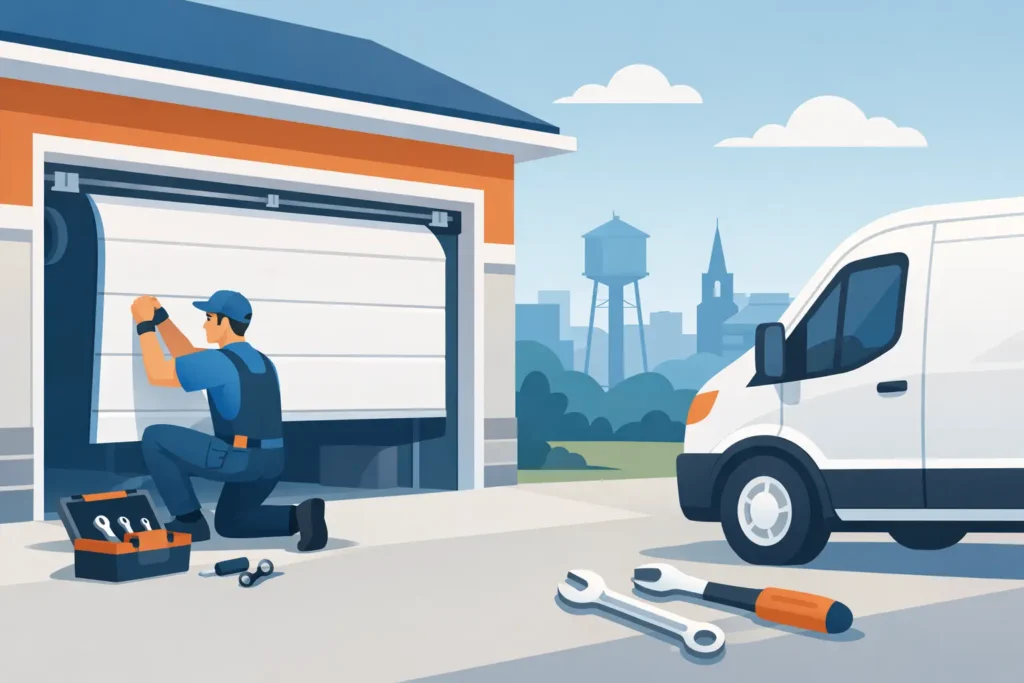
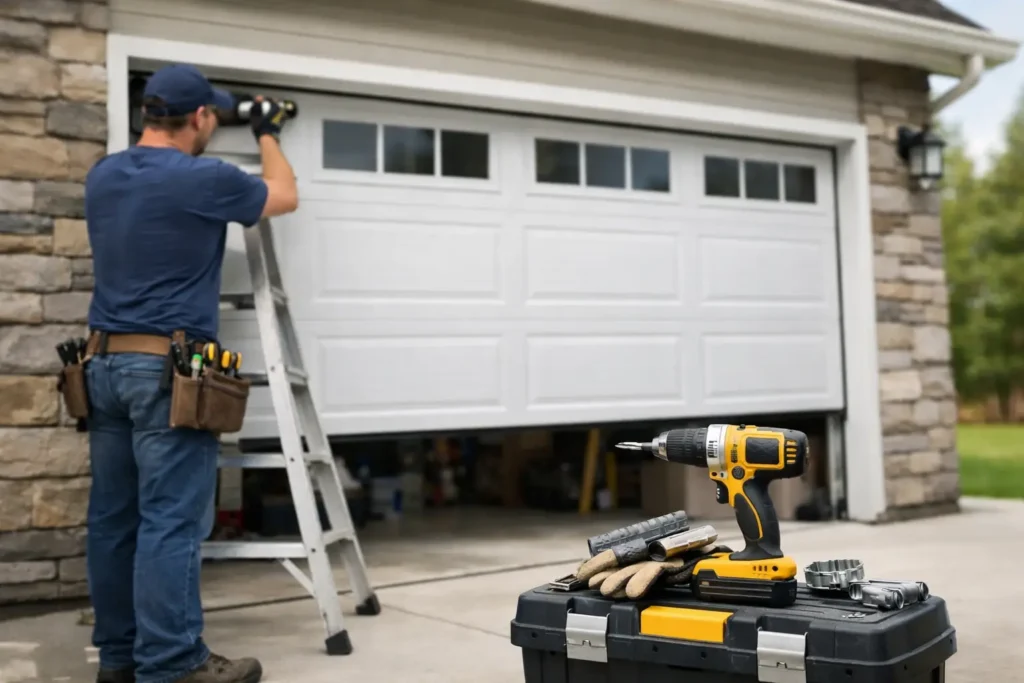
Certified technicians use the proper tools to secure the door, release tension safely, select correctly sized replacement springs, and test balance after the repair. They also inspect related components that may have contributed to the failure. That full-system approach protects your door, your opener, and the people using the garage.
What to Do When a Spring Breaks
If your garage door spring breaks, stop using the door and keep people clear of the opening. Do not disconnect the opener and attempt to lift a heavy door by yourself. Do not pull on cables, touch a broken torsion spring, or try to force the door closed if it is hanging unevenly.
If your vehicle is inside the garage, a professional can assess the safest way to regain access. For homeowners and property managers in Wapakoneta, Lima, and surrounding Allen and Auglaize County communities, same-day service can make the difference between a temporary inconvenience and a door that remains unsafe overnight.
The right spring system is the one that is correctly matched, professionally installed, and properly maintained for your door. If your garage door is heavy, noisy, off balance, or refusing to open, treat it as a safety issue and have an experienced garage door technician inspect it before the problem gets worse.