That grinding or squealing sound when the garage door opens is not just annoying. In many cases, it is a warning that moving components are running dry, wearing prematurely, or beginning to bind. Knowing how to lubricate garage door parts can quiet normal friction and help your door operate more reliably through Ohio’s cold winters, humid summers, and frequent temperature swings.
Lubrication is basic preventive maintenance, not a repair for every noisy door. A door that jerks, hangs crooked, will not stay open, has a visible broken spring, or has loose cables needs professional attention. Those symptoms can involve high-tension parts that are not safe for a homeowner to adjust.
What Garage Door Lubricant to Use
Use a garage-door-specific spray lubricant, white lithium grease, or a silicone-based lubricant labeled for garage doors. These products reduce friction without leaving the thick, dirt-holding coating that can create problems later. A small amount goes a long way.
Avoid general-purpose penetrating sprays as your regular lubricant. They can loosen grime and moisture, but they do not provide long-lasting protection for rollers, hinges, and springs. Also avoid heavy grease on tracks. Grease attracts dust, road salt residue, and debris, which can make rollers drag instead of roll.
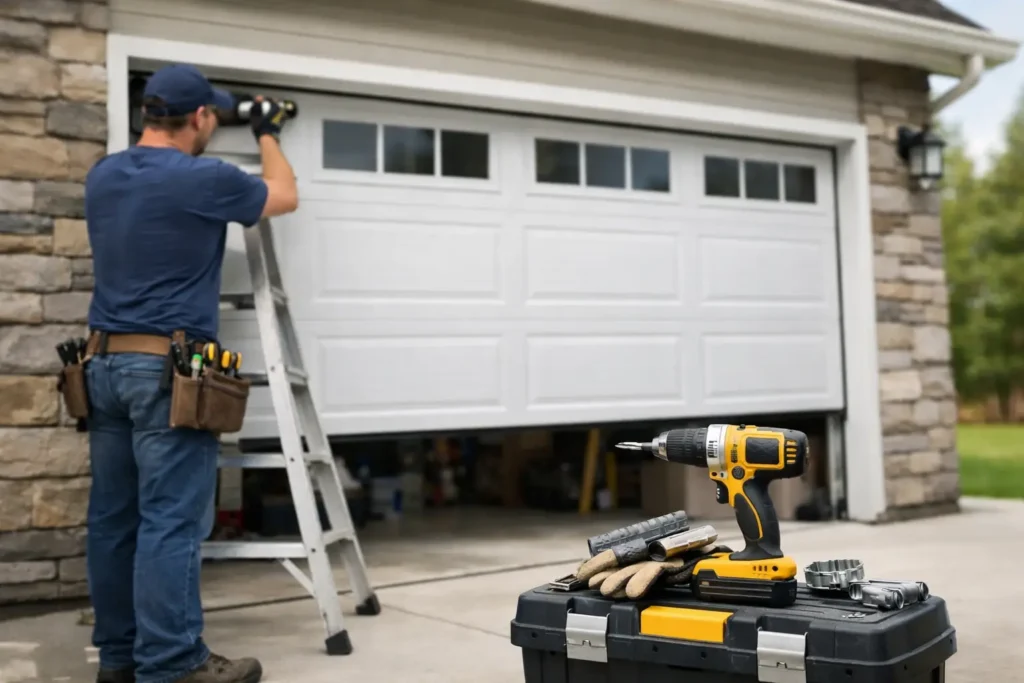
For most residential doors, you will need a clean rag, a garage door lubricant, a step ladder, safety glasses, and possibly a small brush to remove buildup. Keep the work area clear, especially if children, pets, or vehicles are nearby.
How to Lubricate Garage Door Parts Step by Step
Start with the garage door closed. Unplug the opener or switch off its power at the outlet so nobody can accidentally activate the door while you are working. If your opener has a battery backup, follow the manufacturer instructions for disabling operation before placing your hands near moving hardware.
First, wipe away dust, old lubricant, and visible debris from the hinges, roller stems, spring coils, and bearing plates. Do not try to make every part shine. The goal is to remove buildup that prevents lubricant from reaching the moving points.
Lubricate the hinges
Open the door manually only if it moves smoothly and stays safely in position. Apply a brief spray to the pivot point of each hinge, where the hinge folds as door sections move. Wipe away excess product immediately. Lubricant should stay on the joint, not run down the door panels or floor.
Pay particular attention to the hinges near the center of the door, which move the most during each cycle. If a hinge is bent, cracked, or pulling away from the panel, lubrication will not correct it. Stop using the door if the damage affects how the sections align.
Lubricate the rollers, not the tracks
Apply lubricant to the small bearings or stems at the center of each metal roller. Rotate the rollers by hand where possible to help the product work into the bearing. If your door has nylon rollers without exposed bearings, use only a light amount on the metal stem. Do not soak nylon wheels.
Do not spray lubricant inside the vertical or horizontal tracks. The tracks guide the rollers and should generally remain clean and dry. Wipe them with a clean cloth instead. If rollers are rubbing hard against a track, falling out, or making a sharp scraping sound, the track may be misaligned. That is a service issue, not a lubrication issue.
Lubricate the torsion spring and bearing plates
A torsion spring runs above the garage door opening on a metal shaft. With the door closed and opener disabled, apply a light, even coating across the spring coils. This reduces coil-on-coil friction as the spring expands and contracts. Wipe any drips from the header, door, and floor.
You may also apply a small amount to the center bearing and end bearing plates where the shaft turns. Keep your hands away from cables, drums, and spring winding cones. Never loosen set screws or attempt to adjust a torsion spring. A spring under tension can cause severe injury if handled incorrectly.
Lubricate the opener rail only when appropriate
This step depends on the opener design. A chain-drive opener may benefit from a light coating on the chain if its manufacturer allows it. Some screw-drive systems require a specific grease, while belt-drive openers generally do not need lubricant on the belt. Check the owner’s manual before applying anything to the rail, chain, screw, or trolley.
If the opener is loud but the door is quiet when operated manually, the issue may be the opener motor, drive gear, rail, or mounting hardware. Lubricant might help a dry moving point, but it will not fix a worn gear or failing motor.
Parts You Should Never Lubricate
It is just as useful to know what to leave alone. Do not lubricate the tracks, photo-eye lenses, cables, weatherstripping, or the outside surface of the door. Cables can fray internally or lose proper tension, and adding lubricant makes their condition harder to inspect.
Keep lubricant off the bottom seal and threshold. A slippery residue near the entry can become a fall hazard, particularly during wet or icy weather. If spray reaches the photo eyes, wipe the lenses carefully with a dry, soft cloth so the safety system can work correctly.
How Often Should You Lubricate a Garage Door?
For a typical residential garage door, lubrication every six months is a sensible starting point. In the Lima and Wapakoneta area, many homeowners prefer to do it once in the spring and again before winter. Seasonal maintenance helps remove moisture and grime after periods of snow, road salt, and freezing temperatures.
A door used several times a day, a detached garage exposed to more wind and dust, or a small commercial door may need more frequent inspection. On the other hand, adding lubricant every time the door makes a sound is not the answer. Excess product collects dirt and can hide mechanical trouble.
While you are lubricating, look over the hardware. Check that roller brackets, hinges, and track fasteners appear secure. Test the auto-reverse feature according to your opener manual, and make sure the photo eyes are aligned and unobstructed. Do not tighten or adjust components connected to springs or cables.
When Noise Means You Need Garage Door Repair
A properly lubricated door should sound smoother, but it should not be expected to be silent. Some normal motor and roller noise is unavoidable. What matters is whether the sound is new, harsh, repetitive, or paired with changes in movement.
Call a trained garage door technician if you hear a loud bang from above the door, see a gap in the torsion spring, notice loose or tangled cables, or find that the door opens unevenly. You should also schedule service if the door feels unusually heavy, reverses without an obstruction, shakes violently, or leaves gaps when closed.
These problems can put extra strain on the opener and create a real safety risk. Certified technicians can identify whether the cause is worn rollers, damaged hinges, misaligned tracks, failing bearings, spring trouble, or an opener problem. Professional repair is especially worthwhile when a door is used as the main entrance to the home or protects a vehicle, workshop, or commercial space.
A few careful minutes of lubrication can prevent ordinary wear from turning into a louder, rougher operation. Keep the product on the moving joints, keep it off the tracks and safety equipment, and treat any issue involving springs, cables, or uneven movement as a reason to call for experienced help.