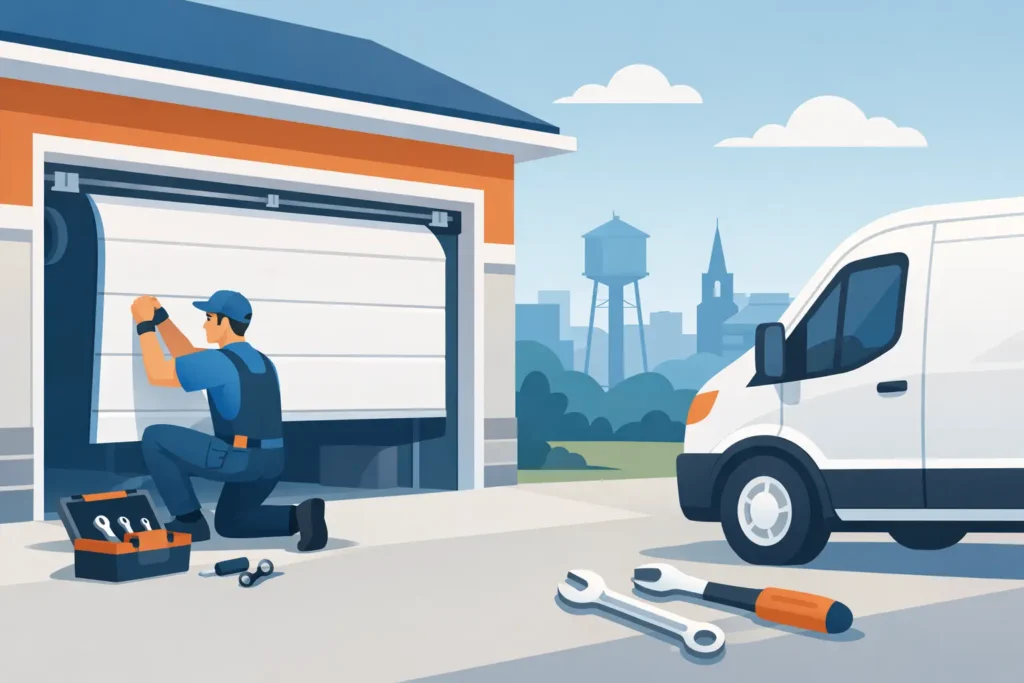
The first hard freeze usually tells the story. A garage door that worked fine in October starts groaning, moving unevenly, or refusing to close all the way once Ohio temperatures drop. That is exactly why garage door maintenance for Ohio winters matters. Cold weather puts extra stress on springs, rollers, tracks, weather seals, and openers, and small issues can turn into a door that is stuck halfway open when you need to leave for work.
In this part of Ohio, winter is not just cold. It is wet, windy, and full of temperature swings that test every moving part on a garage door system. Ice, road salt, moisture, and repeated freeze-thaw cycles can speed up wear in ways many homeowners do not notice until the door becomes noisy, slow, or unsafe. A little preventive attention before deep winter sets in can make the difference between a reliable door and an emergency repair.
Why garage door maintenance for Ohio winters matters
A garage door is one of the largest moving systems in your home. It depends on balance, tension, smooth movement, and a properly working opener. Winter affects all of that.
Metal contracts in the cold. Lubricants thicken. Rubber weather seals stiffen and crack. Moisture can settle into tracks or around the bottom seal and freeze overnight. If the door is already slightly out of balance or a spring is getting weak, winter often exposes it fast.
That is why winter maintenance is not about making the door look better. It is about safety, reliability, and preventing unnecessary strain on high-wear components. A door that drags, jerks, or sticks is not just inconvenient. It can damage the opener, wear out rollers, and create a safety risk for your family or tenants.
What to check before freezing weather hits
The smartest time to inspect a garage door is before the first stretch of sustained cold. You do not need to be a technician to spot early warning signs, but you do need to know what matters.
Start with the way the door moves. If it sounds louder than usual, hesitates during travel, or shakes as it opens, those are signs something is wearing unevenly. A properly working door should move smoothly and stay aligned in the tracks. If one side appears lower or the door looks crooked while moving, stop using it until it can be checked professionally.
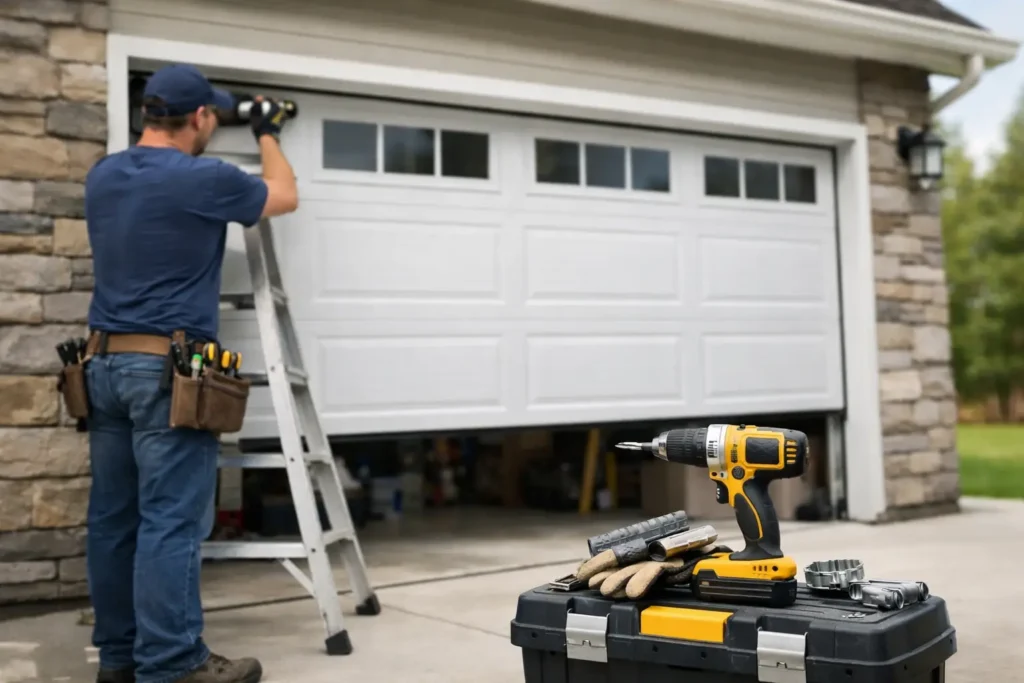
Next, look at the hardware. Hinges, brackets, rollers, and track mounts can loosen over time from vibration and repeated use. Ohio winter winds and temperature changes do not help. If you see rust, bent track sections, frayed cables, or worn rollers, that is not a wait-and-see issue.
The weather seal deserves attention too. The bottom seal should sit flat against the floor without visible gaps, and the perimeter seal around the frame should not be cracked or pulled away. If cold air, snow, or water can get in, your garage becomes harder to protect and your door may freeze to the ground after a storm.
Lubrication matters, but the right kind matters more
One of the most common winter mistakes is using the wrong lubricant. Heavy grease can stiffen in low temperatures and make movement worse, not better. Garage doors need a product designed for door hardware, applied lightly to the rollers, hinges, bearings, and spring surfaces where appropriate.
If the door has not been lubricated in a while, you may hear squealing or grinding once the temperature drops. That noise is your warning. Friction increases wear, and in winter that extra resistance puts more demand on the opener.
At the same time, more is not better. Over-applying lubricant can attract dirt and debris, especially around tracks and roller assemblies. Tracks themselves usually need cleaning more than lubrication. If there is hardened grime in the tracks, the rollers will not move as cleanly as they should.
The parts that fail most often in winter
Springs are at the top of the list. They do the heavy lifting, and when temperatures drop, older springs are more likely to snap under stress. If your garage door suddenly feels extremely heavy, opens a few inches and stops, or makes a sharp bang from inside the garage, a broken spring is a likely cause. This is not a DIY repair. Springs are under high tension and can cause serious injury.
Rollers are another common trouble spot. Worn rollers become noisy, develop flat spots, or drag in the tracks. In freezing weather, that resistance becomes more noticeable. The opener then has to work harder to move a door that should be gliding.
Cables, while less talked about, are just as important. Moisture and corrosion can weaken them over time. If a cable starts to fray or come off the drum, the door can lift unevenly and become dangerous quickly.
Openers also struggle in winter, but often the opener is not the real problem. Many homeowners assume the motor is failing when the actual issue is an unbalanced door, failing spring, or sticking hardware. Replacing an opener without fixing the mechanical cause usually does not solve much.
Garage door maintenance for Ohio winters and frozen doors
A frozen garage door is one of the most common cold-weather service calls. It usually happens when melting snow or water collects under the bottom seal and refreezes overnight. Then the opener tries to lift a door that is literally stuck to the floor.
If that happens, do not keep hitting the opener. That can strip gears, overheat the motor, or damage the door sections. Try to break the bond carefully by clearing ice around the base. In mild cases, the seal can be loosened gently. In more severe cases, forcing it will create a bigger repair.
This is where seal condition matters. A worn or hardened bottom seal is more likely to trap moisture in the wrong places. Good sealing does not prevent every freeze, but it reduces the odds and helps protect the garage from drafts and water intrusion.
Safety checks homeowners should not skip
Winter is a good time to test the door’s basic safety systems. If your opener has auto-reverse sensors near the floor, make sure they are clean, aligned, and not blocked by storage items, leaves, or salt residue. If the door closes partway and goes back up, sensor issues are one possibility.
You should also test the opener’s reversal function according to manufacturer guidance. A garage door that does not reverse properly when it meets resistance is a serious hazard.
Balance is another key safety check. With the opener disconnected, a properly balanced door should lift manually with reasonable effort and stay near place when partially open. If it drops quickly or feels extremely heavy, something is wrong with the spring system. That is the point to call a trained technician, not to keep experimenting.
When maintenance becomes a repair call
There is a line between homeowner maintenance and professional service, and winter is not the time to blur it. Cleaning tracks, checking seals, and watching for obvious wear are reasonable. Adjusting spring tension, replacing cables, fixing off-track doors, or forcing a stuck door are not.
If the door is slamming shut, hanging unevenly, making loud popping sounds, or refusing to open, it needs service. The same goes for visible spring damage, bent tracks, or opener strain. Waiting can turn a contained problem into damage across multiple parts of the system.
For property managers and small commercial operators, the risk is even higher because door failures affect access, security, and daily operations. A little preventive maintenance beats a service interruption during snow or ice.
A winter maintenance plan that actually works
The best approach is simple. Inspect the door before winter, listen for changes once temperatures drop, and respond early when something feels off. Most major winter failures start with smaller warnings – extra noise, rough movement, slow response, gaps at the seal, or a door that no longer feels balanced.
For homes in and around Wapakoneta and nearby communities, local winter conditions make experience matter. A technician who regularly services garage doors in Ohio knows what salt, moisture, freezing temperatures, and repeated thaw cycles do to hardware over time. That kind of climate-specific maintenance is not a sales pitch. It is practical prevention.
If your garage door has been getting louder, slower, or less reliable, do not wait for the next cold snap to decide for you. A well-maintained door handles winter better, protects your home better, and is far less likely to fail when you need it most.
A garage door should not be the weak point in your home during January. Give it attention before the weather forces the issue, and if something does not sound or feel right, get it checked while it is still a manageable fix.