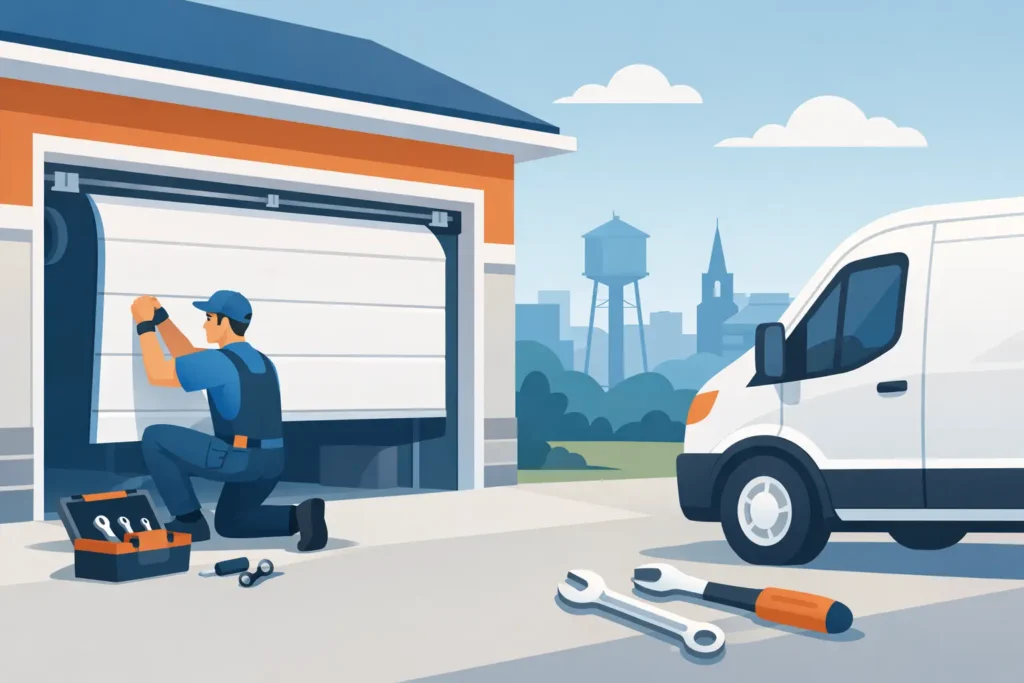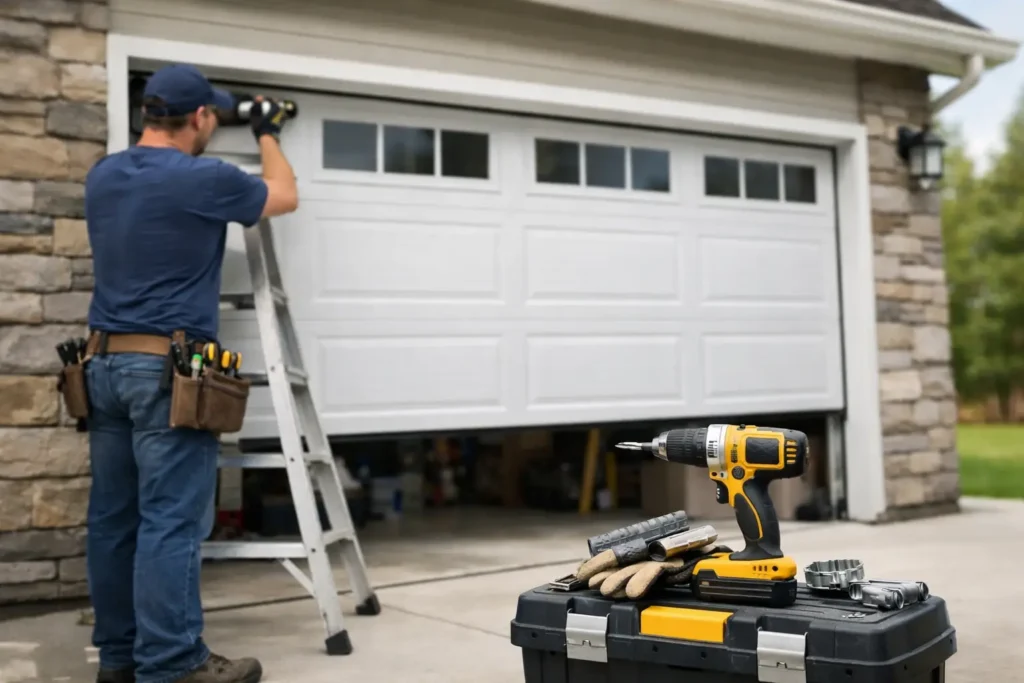
A garage door that starts up, moves a few inches or feet, and suddenly stops is not a problem to ignore. If you are asking why garage door opens then stops, the system may be detecting resistance, losing lifting power, or responding to a fault in the opener. The cause can be as simple as a blocked track, but it can also involve a failed spring or an unsafe door balance issue.
The most useful clue is where the door stops and what happens next. Does it stop in the same spot every time? Does the opener light flash? Does the door reverse, hang crooked, make a grinding sound, or only fail during cold Ohio weather? Those details help narrow down the repair quickly.
Why Garage Door Opens Then Stops
Your garage door opener is designed to stop when it senses excessive force or a problem with the door’s movement. That safety response protects the motor, the door, and anyone nearby. It also means the opener is often reacting to another problem rather than being the only failed part.
A door that stops while opening is different from a door that will not close. Photo-eye sensors commonly cause closing problems, while opening problems more often point to springs, tracks, rollers, cables, or opener settings. There are exceptions, especially on newer openers with diagnostic lights, so a proper inspection matters.
1. A broken or weakening garage door spring
Garage door springs carry most of the door’s weight. When a torsion spring breaks, the opener may lift the door only partway before stopping because it cannot safely handle the full load. Extension springs can cause a similar issue, particularly if one side fails or stretches significantly more than the other.
A loud bang from the garage, a door that suddenly feels extremely heavy, or a visible gap in the torsion spring above the door are common signs. The door may open a few inches and stop, or the opener may strain, hum, and shut off.
Do not try to force the door open or replace a spring yourself. Springs are under high tension and can cause serious injury when handled incorrectly. A trained garage door technician can identify the correct spring size, replace it safely, and confirm the door is properly balanced afterward.
2. Bent tracks, worn rollers, or an obstruction
The door must travel smoothly through its vertical and horizontal tracks. A bent track, loose bracket, damaged roller, or small obstruction can create enough resistance to trigger the opener’s force limit. The door often stops at the exact same point each time because it reaches the damaged area of the track.
Look from a safe distance for leaves, gravel, ice, tools, or other objects near the track. In Wapakoneta and surrounding communities, winter road salt, moisture, and freeze-thaw cycles can also contribute to corrosion and binding hardware. Avoid hitting, prying, or trying to straighten tracks yourself. Tracks are precisely aligned, and a small adjustment in the wrong direction can pull rollers out or cause the door to bind harder.
If the door shakes, jerks, scrapes metal, or appears uneven while moving, stop using the opener until it is inspected. Continued operation can turn a roller or track repair into damage to the door sections, cables, or opener rail.
3. A cable has come loose or slipped off the drum
Lift cables work with the springs to raise the door evenly. When a cable frays, loosens, or slips off its drum, one side of the door may begin lifting while the other side lags behind. The opener may stop because the door is crooked and binding in the tracks.
A visibly slanted door, loose cable near the side of the opening, or a gap under one bottom corner calls for immediate attention. Do not pull on the cable, release the opener, or attempt to rewind it. The cable system is connected to spring tension, and improper handling can make the door fall or cause the cable to snap.
4. The opener’s force or travel settings are out of adjustment
Garage door openers use travel limits to know where the door should stop and force settings to detect unusual resistance. If these settings are incorrect, the opener may stop before the door reaches the fully open position. This can happen after a power outage, an installation, a repair, or gradual changes in the door’s movement.
Adjustment is not always the right answer. Increasing the force setting when a spring is failing or a track is binding can overwork the opener and hide a dangerous mechanical problem. A technician should first make sure the door moves freely and is balanced before calibrating opener settings.
On some models, diagnostic lights or a flashing LED pattern can identify an overload, travel-limit issue, or motor fault. Check your opener manual for the meaning of the code, but do not assume a reset alone has fixed the underlying cause.
5. The opener motor, gear, or drive system is failing
An opener that stops mid-cycle may have a worn internal gear, failing motor, damaged logic board, or problem with its belt, chain, or screw drive. You may hear the motor running without the door moving, notice intermittent operation, or find that the opener works once and fails the next time.
Age and use matter here. A residential opener that has operated reliably for years can begin showing failure under the heavier load of a poorly balanced door. In that situation, replacing the opener without correcting the spring or door issue can shorten the life of the new unit as well.
A professional inspection can determine whether an opener repair is appropriate or whether replacement is the more dependable long-term solution. The door’s weight, condition, safety features, and daily use should all be considered before making that call.
6. The door is out of balance
A properly balanced garage door should not rely on the opener to do all the lifting. When the springs are correctly matched and adjusted, the door can be moved manually with reasonable effort and should stay near the halfway point. If it falls shut, races upward, or feels excessively heavy, the balance is wrong.
An out-of-balance door makes the opener work harder every cycle. Eventually, it may stop partway up, reverse unexpectedly, or burn out an internal component. This is one of the most common reasons a problem that seems like an opener issue turns out to be a spring-system repair.
Balance testing requires care. If you are not experienced with garage door systems, leave the opener connected and schedule service rather than disengaging a heavy or unstable door.
7. Cold weather, frozen seals, or lack of lubrication
Cold temperatures can expose problems that were already developing. Thickened lubricant, contracted metal, frozen moisture around the bottom seal, and stiff rollers can all increase resistance. If your door only stops during a cold snap, that does not necessarily mean the weather is the sole cause. It may mean the opener no longer has enough margin to overcome worn components.
Do not use grease on the tracks. Grease attracts debris and can make rollers drag. A garage door professional can clean the system and apply the correct lubricant to rollers, hinges, bearings, and springs where appropriate. They can also inspect weather seals and hardware affected by Ohio’s seasonal conditions.
Safe Checks Before You Request Garage Door Repair
First, keep people, vehicles, and pets clear of the door. If the door is partly open and unstable, do not walk or drive underneath it. Use the wall button only once to see whether the door responds normally. Repeatedly pressing the remote can force the opener to strain against the same problem.
From the floor, check for obvious debris in the tracks and make sure nothing is blocking the door’s path. Look for a broken spring, hanging cable, crooked door, bent track, loose roller, or unusual gap between door sections. Listen for grinding, popping, or a motor that hums without moving the door.
You can also verify that the opener has power and that the remote battery is working, but avoid removing covers, adjusting spring hardware, or changing force settings blindly. If the door is stuck open, secure the garage and arrange prompt service. If it is stuck closed, do not force it with a vehicle or pry it from the bottom.
When Same-Day Service Is the Right Move
Call for professional garage door repair promptly when the door is crooked, heavy, stuck open, off its tracks, or connected to a broken spring or cable. These are not wait-and-see issues. A door can fall unexpectedly, leave your property unsecured, or damage the opener if it continues to run under strain.
For homeowners and property managers in the Lima and Wapakoneta area, same-day service is especially valuable when the garage is the main entry point, a vehicle is trapped, or a commercial overhead door affects daily operations. Certified technicians can inspect the entire system, not just the part that appears to have failed, and complete repairs with safety and dependable operation in mind.
A garage door should open smoothly, stay aligned, and stop only where it is supposed to. When it does not, treating the warning early is the safest way to protect your door, your opener, and everyone who uses the garage.