A garage door that starts rising unevenly is not just an eyesore. It can bind in the tracks, strain the opener, damage panels, or come off its path entirely. If you are asking, “why is garage door crooked,” the answer is usually a problem with the door’s balance, cables, springs, tracks, or hardware. Because those parts work under significant tension, a crooked door deserves prompt attention.
Why Is Garage Door Crooked When It Opens?
A garage door is designed to move as one balanced system. The springs carry most of the door’s weight, the cables lift each side evenly, the rollers guide it through the tracks, and the opener helps control movement. When one component fails or shifts, one side of the door can rise faster than the other.
The result may be subtle at first. You might notice one bottom corner hanging lower, hear scraping or popping, or see a gap beneath one side when the door is closed. In more serious cases, the door may stop halfway, hang at an angle, or refuse to move at all.
Do not keep pressing the opener button to force a crooked door through its travel. That can turn a repairable cable, roller, or track issue into bent panels, opener damage, or a door that falls unexpectedly.
A broken or weakened spring
Broken torsion springs are one of the most common reasons a garage door becomes uneven. On many residential doors, the spring system is responsible for counterbalancing hundreds of pounds. When a spring breaks, loses tension, or wears unevenly, the door may become too heavy for one side to lift correctly.
You may hear a loud bang from the garage when a torsion spring breaks. The door can then feel extremely heavy, rise only a few inches, or lift crookedly as the opener struggles. Extension spring systems can create similar symptoms if one spring breaks or stretches more than the other.
Springs are not a homeowner repair. They are under high tension, and improper handling can cause serious injury. A certified technician should inspect the system and replace the correct springs as a matched set when needed.
A slipped, loose, or broken lift cable
Each side of the garage door uses a cable to transfer spring tension into lifting force. If a cable comes off the drum, frays, loosens, or snaps, one side may stay down while the other side rises. This creates the classic crooked-door appearance.
Cable issues often happen after a door has hit an obstruction, moved with a broken spring, or been forced while frozen to the floor during an Ohio winter. Worn rollers, damaged drums, and loose hardware can also contribute.
If you see a loose cable hanging near the side of the door, stop operating it immediately. Do not pull on the cable or attempt to rewind it. The tension in the spring and cable system makes this a professional repair.
Bent, blocked, or misaligned tracks
The tracks on both sides of the opening keep the rollers moving in a controlled path. A track can bend after a vehicle bumps it, a ladder falls against it, or the door operates with worn rollers. Even a small misalignment can cause one side to drag or bind.
Look for visible dents, gaps between the rollers and track, loose mounting brackets, or debris inside the track. Salt, moisture, and seasonal temperature changes around Lima and Wapakoneta can also speed up corrosion on older hardware.
Avoid trying to straighten a track with a hammer. Tracks must be aligned precisely, and striking them can make the problem worse. A technician can determine whether the track can be adjusted or needs replacement.
Worn rollers, hinges, or door sections
Rollers and hinges are smaller parts, but they have a major job. When a roller wears down, cracks, or jumps out of the track, the door may not travel evenly. Damaged hinges can allow a section to sag or pull away from its proper alignment.
A dented or rotted door section can also create an uneven load. This is especially common with older wooden doors, doors that have been backed into, or commercial doors that see frequent daily use. If one panel is weakened, the entire door can flex differently as it opens.
In some cases, replacing rollers or hinges restores smooth operation. In others, panel replacement or a full door replacement is the safer long-term choice. The right solution depends on the door’s age, condition, and whether the structural integrity of the sections has been compromised.
An opener problem that is hiding a door problem
A garage door opener does not do the heavy lifting. Its job is to guide a properly balanced door. If the opener rail is loose, the travel limits are incorrect, or the motor has been strained by an unbalanced door, it may appear that the opener is causing the crooked movement.
Usually, however, the opener is reacting to a mechanical problem elsewhere. Replacing an opener without correcting broken springs, cables, tracks, or rollers can lead to repeat failures. A complete inspection should check the door system first, then confirm whether the opener needs adjustment or repair.
Signs Your Crooked Garage Door Is Unsafe to Use
A door that is only slightly uneven can become a serious safety concern quickly. Stop using the door and arrange service if it is hanging at an angle, has a cable off the drum, has rollers out of the track, or makes loud grinding, snapping, or scraping sounds.
You should also stop operating the door if it will not stay fully open, reverses unexpectedly, moves in jerks, or leaves a large uneven gap at the bottom. These signs may indicate a failed counterbalance system or a door that is no longer secured in its tracks.
Keep children, pets, vehicles, and stored belongings clear of the opening until the problem is repaired. If the door is partly open and unstable, do not stand beneath it or try to support it by hand. Garage doors are heavy, and an unsupported door can drop without warning.
What You Can Check Before Calling for Repair
Homeowners can safely make a few observations without touching high-tension parts. With the door closed and the opener unplugged, look at the tracks for obvious debris or damage. Check whether a vehicle, tool, trash bin, ice buildup, or other object is blocking the door’s path.
You can also note which side is lower, whether a cable is loose, and when the issue began. That information helps a technician diagnose the problem faster. If the door is fully closed and appears normal, inspect the weather seal area for signs that one side is compressing more than the other.
Do not loosen cable brackets, remove bottom fixtures, adjust torsion spring set screws, or disconnect an angled door from the opener. Those components can release stored force suddenly. The safest next step is a professional inspection, especially when the door is stuck or visibly off track.
How Technicians Fix a Crooked Garage Door
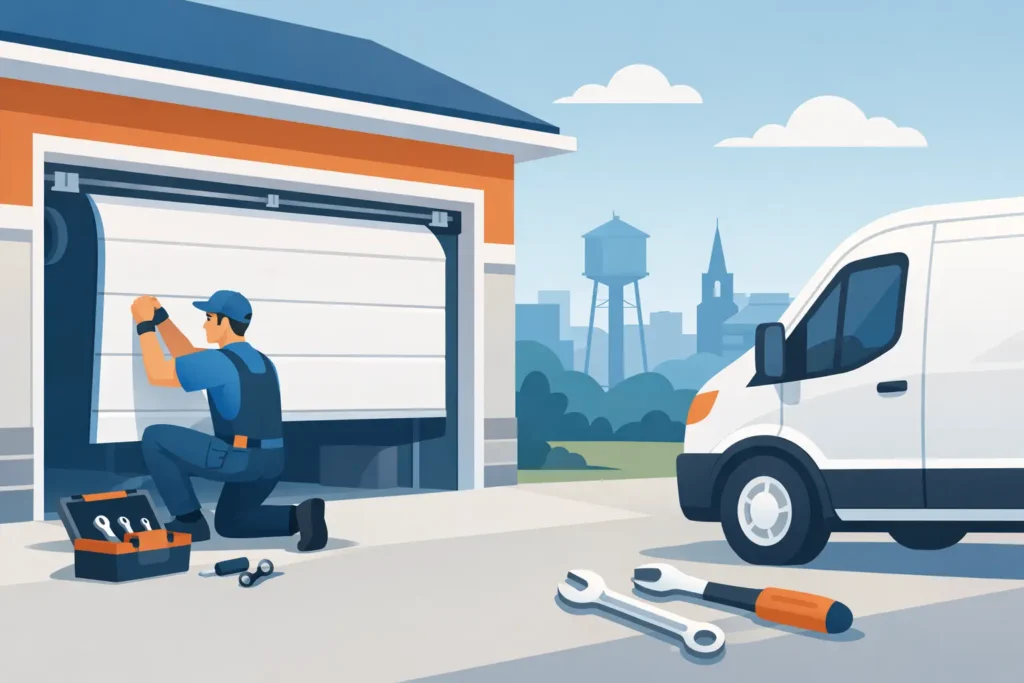
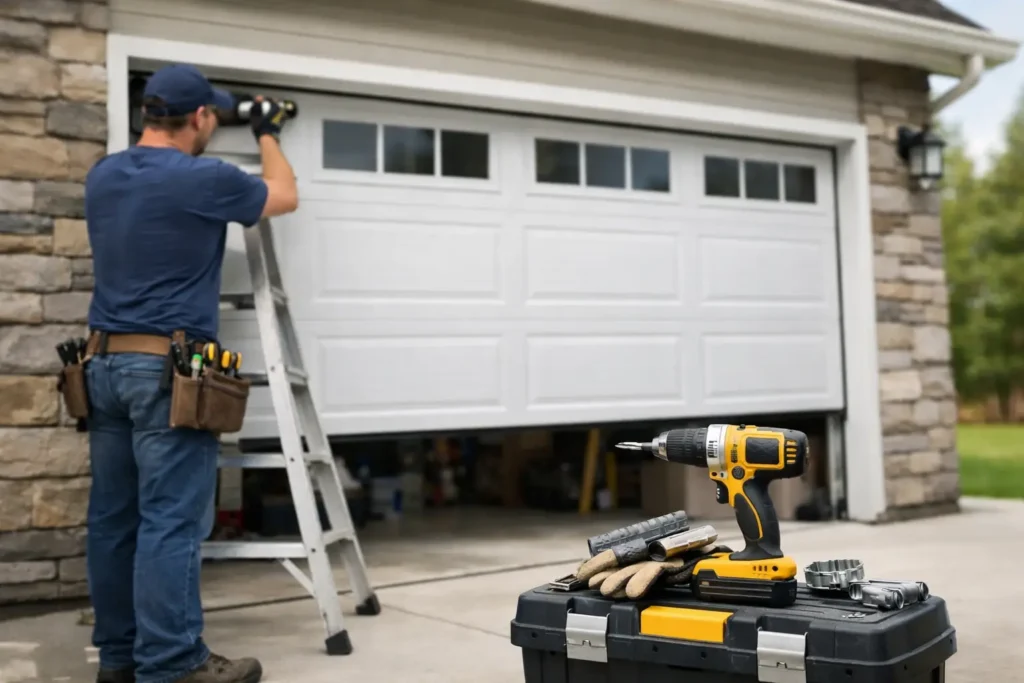
A qualified garage door technician starts by securing the door and identifying the source of the imbalance. The repair may involve resetting cables on the drums, replacing broken springs, realigning tracks, installing new rollers or hinges, tightening hardware, or replacing damaged sections.
The door should then be tested for proper balance and smooth travel. A balanced door can usually be lifted manually with reasonable effort when disconnected from the opener, and it should not shoot upward or crash downward. The technician will also check safety sensors, opener force settings, and the condition of the drums, bearings, and brackets.
This full-system approach matters. Fixing only the visible issue can leave the original cause in place. For example, a cable may have slipped because a roller seized, a track shifted, or a spring lost tension. Correcting the underlying problem helps protect the door, opener, and people using the garage.
Preventing the Door From Going Crooked Again
Most garage doors benefit from professional maintenance at least once a year, particularly doors used multiple times each day. A service visit can catch frayed cables, worn rollers, loose hinges, weakening springs, and track alignment concerns before they cause a sudden failure.
Between visits, keep the tracks clear, avoid hitting the door or tracks with vehicles and equipment, and pay attention to changes in sound or movement. Lubricating approved moving parts may help reduce wear, but avoid applying heavy grease inside the tracks. Rollers need a clean path to move freely.
For local homeowners and property managers, winter deserves extra attention. Do not force a door open when the bottom seal is frozen to the concrete. Clear snow and ice from the opening, and call for same-day service if the door begins lifting unevenly after a cold snap.
A crooked garage door is your system’s way of telling you something is out of balance. Acting early protects your door from further damage and keeps a routine trip in or out of the garage from becoming a safety problem.