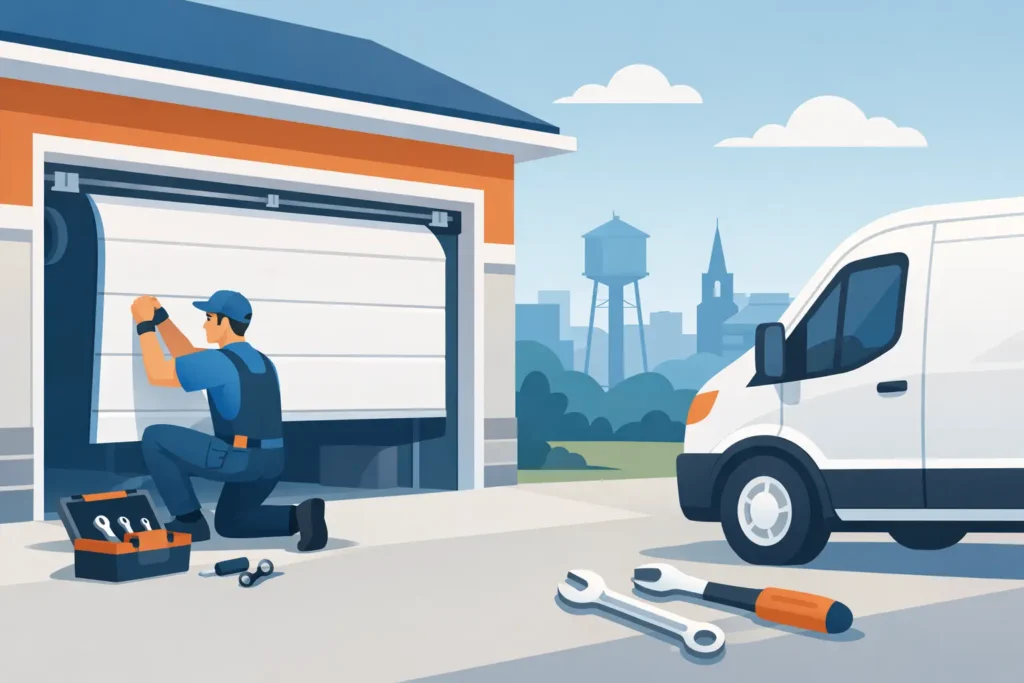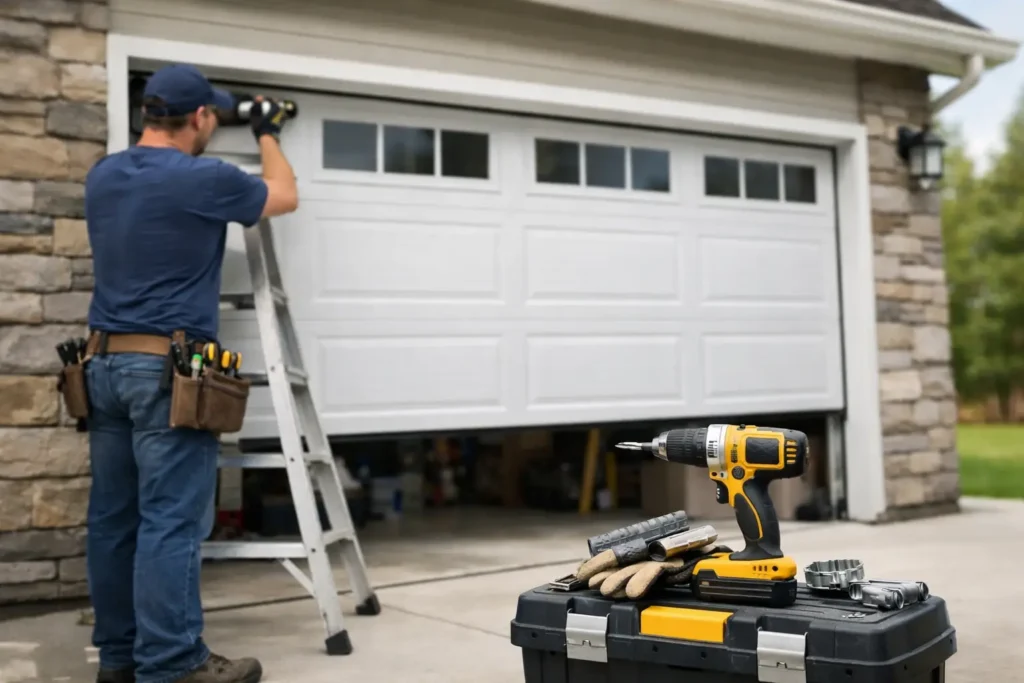
You usually do not need to see a spring snap to know something is wrong. If your garage door suddenly feels too heavy, stops halfway, or makes a sharp bang that sounded like something broke in the garage, you may already be dealing with exactly what homeowners mean when they search how to spot broken garage spring problems.
That matters because a broken spring is not a minor inconvenience. It changes how the entire door moves, how much strain goes onto the opener, and how safe the system is to use. A garage door can weigh well over a hundred pounds, and the spring system is what makes that weight manageable. When a spring fails, the door may become unstable fast.
How to spot broken garage spring trouble early
The clearest sign is often a door that will not open normally. In some cases, the opener hums or strains but the door barely moves. In others, the door starts up a few inches and then stops. Homeowners sometimes assume the opener is the problem, but the real issue is the spring no longer helping lift the weight.
You may also notice the door feels unusually heavy if you try to lift it by hand. A working spring counterbalances the door. A broken one does not. If the weight feels sudden and extreme, stop there. Forcing the door can make the situation worse and create a safety risk.
Another common clue is a loud popping or banging sound. Torsion springs often break under tension, and when they do, the sound can be strong enough to make you think something hit the house. In Ohio, we hear this especially after temperature swings, when metal parts are already under extra stress.
Then there is the visual inspection. If you have a torsion spring mounted above the door, look for a visible gap in the coil. That separation is one of the most reliable signs that the spring has snapped. If your system uses extension springs along the horizontal tracks, one side may look stretched out, loose, or visibly out of position.
What a broken spring looks and feels like
Garage door springs do not all fail in exactly the same way. The type of system on your door affects what you are likely to notice first.
Torsion spring signs
Torsion springs are mounted on a shaft above the garage door opening. When one breaks, there is usually a clean gap somewhere in the coil. The door may lift unevenly or refuse to open at all. If you have a two-spring system, one spring may still be intact, which can make the problem less obvious at first, but the door will still be out of balance and unsafe to run normally.
A homeowner may also notice the cables looking loose at the sides of the door. That happens because the spring is no longer holding proper tension on the shaft and drums.
Extension spring signs
Extension springs run along the track on either side of the door. When one fails, you might see a hanging cable, a spring that looks stretched longer than normal, or one side of the door sitting lower than the other. The door may jerk during movement or slam shut instead of lowering in a controlled way.
Extension spring problems can look a little messier than torsion spring failures. Parts may shift out of place, and the imbalance is often easier to spot from one side to the other.
The warning signs people often miss
A spring does not always go from fine to fully broken without notice. Sometimes the system gives you a little warning first.
The door may start moving slower than usual. It may sound louder during operation, especially near the top of travel. You may hear groaning, squeaking, or straining that was not there before. The opener may seem like it is working harder, or the door may hesitate and then continue.
Another overlooked sign is a door that does not stay in place when opened halfway by hand. A balanced garage door should hold fairly steady. If it drops or shoots upward, spring tension may already be off. That does not always mean the spring is broken yet, but it does mean the system needs attention.
Weather can also play a role. In areas like Wapakoneta and surrounding communities, freeze-thaw cycles and winter cold can make already worn springs more likely to fail. Rust, age, and repeated daily use add up. Many homeowners only realize the spring was weakening after the final break happens.
When it might not be the spring
Not every stuck garage door has a broken spring. Sometimes the opener settings are off, a cable has come off the drum, the rollers are binding, or the photo eyes are causing a reversal issue. That is why a quick visual check helps before assuming the cause.
Still, there are a few signs that strongly point back to the spring. If the opener runs but cannot lift the door, if the door feels dramatically heavier than normal, or if you can see a gap in the spring, those are strong indicators. If the top section of the door looks stressed or the opener arm is pulling hard without progress, stop using it. Continuing to cycle the opener can damage other parts that were not originally the problem.
What to do if you think the spring is broken
The safest next step is simple. Do not keep pressing the opener button, and do not try to force the door open or closed. A broken spring changes the load on every connected part, including the opener, cables, brackets, and panels. What starts as one failed component can turn into a larger repair if the system is pushed.
If the door is open, keep people clear of it until it is inspected. If it is closed, leave it closed unless a trained technician advises otherwise. That is especially important with double-wide doors, which are heavier and put more force on the remaining hardware.
This is not a good DIY job for most property owners. Garage door springs are under high tension, and mishandling them can cause serious injury. Even identifying the exact spring size and cycle rating requires experience if you want the repair done correctly.
Why fast service matters
A broken spring can affect more than convenience. It can trap vehicles inside, leave a property unsecured, or create a hazard for anyone using the garage as a main entry point. For homeowners and small commercial property operators, that kind of disruption usually needs same-day attention.
It also helps to have the full system checked at the same time. When a spring breaks, other parts may already be worn from carrying uneven load. Cables, rollers, bearings, hinges, and opener settings should be inspected so the door is safe and balanced after the repair. That is the difference between a quick patch and a professional fix that holds up.
For local property owners, working with a licensed and insured garage door company means the issue gets diagnosed correctly the first time. A trained technician can confirm whether the spring is broken, whether both springs should be addressed on a two-spring system, and whether the opener or cables were affected.
How to spot broken garage spring issues before a total failure
If your door is still moving but not acting right, pay attention now instead of waiting for a complete breakdown. Look at the spring above the door or along the tracks. Listen for new noises. Notice whether the door feels balanced and smooth or heavy and jumpy.
Routine maintenance inspections help catch wear before the spring lets go. That is especially useful for older doors, doors used several times a day, and systems that have gone through Ohio winters without recent service. Springs are wear items. They do not last forever, and replacing them at the right time is far safer than waiting for a sudden failure.
If you are not sure what you are seeing, that is reason enough to call. Most homeowners are not expected to diagnose garage door hardware on their own, and they should not have to. A dependable local team can inspect the system, confirm the problem, and get the door operating safely again with the right parts and workmanship.
If your garage door suddenly sounds wrong, lifts unevenly, or feels heavier than it should, trust that instinct. A broken spring rarely fixes itself, and the safest move is to stop using the door and have it checked before a bad situation turns into a dangerous one.