A garage door opener is easy to overlook until the morning it will not lift the door, the remote quits in bad weather, or a power outage leaves your vehicle stuck inside. The best garage door opener features are not about having the most buttons on a remote. They are about safe, dependable operation for one of the heaviest moving systems in your home.
For homeowners and property managers in west-central Ohio, the right opener also has to handle real conditions: freezing temperatures, humid summers, power interruptions, daily use, and doors that may be heavier than they look. A qualified installer can match the opener to the door, springs, tracks, and use of the space. That matters more than choosing an opener based on a single feature or brand name.
Best Garage Door Opener Features That Matter Most
Battery backup for power outages
Battery backup is one of the most practical features available on a modern opener. When severe weather knocks out power, a battery-equipped unit can still open and close the garage door for a limited number of cycles. That can make a major difference if your garage is your primary entrance, if you need to get to work, or if someone in the household needs access to a vehicle quickly.
Not every homeowner needs every available convenience feature, but battery backup is worth serious consideration in areas where storms can interrupt power. It also provides peace of mind during an emergency, when manually lifting a heavy garage door may not be safe or manageable for everyone.
Safety sensors that work every time
Federal safety standards require photo-eye sensors on residential garage door openers. These small sensors sit near the bottom of the tracks and stop or reverse the door if an object, child, pet, or vehicle crosses the opening while the door is closing.
The feature is standard, but installation and adjustment are critical. Sensors that are bumped out of alignment, covered with dirt, affected by sunlight, or connected with damaged wiring can prevent a door from closing properly. A reliable opener should have clearly functioning safety sensors, a responsive reversing system, and a wall control that lets you monitor operation without guessing.
Test the reversal function regularly. Place a solid object such as a piece of wood on the floor under the door. When the closing door contacts it, the door should reverse. If it does not, stop using the opener until a trained technician inspects it.
Smart control with useful alerts
Smart garage door openers allow you to check and operate your door through a phone app. For many households, the biggest benefit is not opening the door from a distance. It is being able to confirm whether the door is closed after leaving home.
Look for a system that provides open-door alerts, activity notifications, scheduled closing options, and the ability to give temporary access to family members, contractors, or delivery personnel. These features are especially helpful for rental properties and small commercial buildings where several people may need access.
Smart control does come with a trade-off. It depends on a stable internet connection and correct setup. It should supplement dependable wall controls and remotes, not replace them. Ask your installer to confirm that the app, Wi-Fi connection, safety features, and manual release all work before the job is complete.
Quiet operation for attached garages
If bedrooms, a nursery, a home office, or living space sit above or beside the garage, noise matters. Belt-drive openers are often the preferred choice for attached garages because the reinforced belt produces less vibration and noise than a traditional chain-drive system.
Chain-drive openers remain a dependable option for many detached garages, workshops, and heavier doors. They can be a strong fit where sound is not a concern. The right decision depends on the door’s weight, the garage layout, and how close the garage is to occupied rooms.
Keep in mind that a noisy opener is not always an opener problem. Worn rollers, loose hardware, dry hinges, damaged tracks, or an improperly balanced door can make any system louder. Replacing an opener without addressing those issues may leave you with the same noise and a shorter service life for the new unit.
The right lifting power for the door
An opener does not actually carry the full weight of a properly working garage door. The springs do that work. The opener guides the balanced door through its travel. Still, the opener must be correctly matched to the size, material, and weight of the door.
A standard single steel door may have different requirements than an insulated double door, a wood-overlay door, or a commercial sectional door. Choosing too little capacity can strain the motor and drive system. Choosing a more capable unit can be sensible for a large or heavy door, but it is not a substitute for correct spring tension and a properly balanced system.
This is where professional evaluation matters. High-tension springs are dangerous to adjust without the proper tools and training. If the door feels unusually heavy when disconnected from the opener, drops quickly, or will not stay halfway open, the balance issue needs attention before a new opener is installed.
Security features that protect access
Your garage is often a direct entry point to the house, so opener security should be part of the decision. Modern openers use rolling-code technology, which changes the access code after each use rather than relying on a fixed signal that can be copied.
A vacation lock on the wall control can also disable remote operation while you are away. This is useful when traveling, though it should not be confused with securing the door itself. Make sure everyone in the household understands how the manual release works and knows not to pull it when the door is open or under strain.
For attached garages, consider an opener with automatic close reminders or app-based alerts. A door left open overnight can expose stored belongings and provide unwanted access to the home.
Bright, well-placed lighting
Built-in LED lighting is a small feature with a large everyday benefit. A well-lit garage is safer when carrying groceries, entering during a storm, or checking equipment after dark. Many newer openers use long-lasting LED lighting that turns on when the door operates and can be controlled separately through the wall station or app.
The best setup depends on the size of the garage. One opener light may be enough for a compact one-car garage, while a wider or deeper space may need additional fixtures. Do not rely on the opener light alone if it leaves stairs, storage areas, or entry doors in shadow.
Features Are Only as Good as the Door System
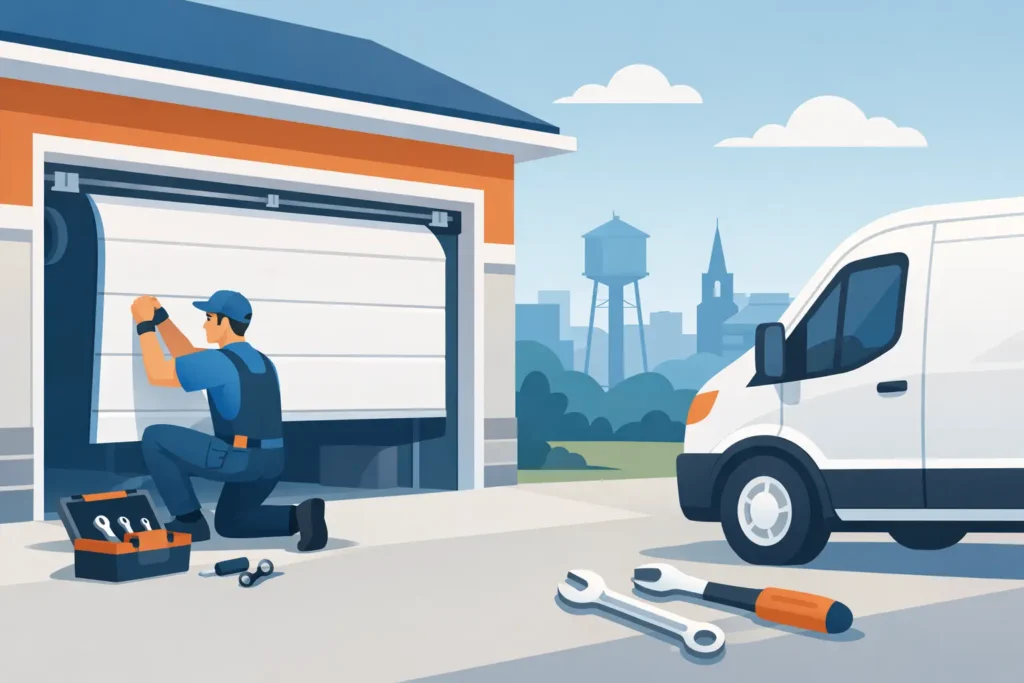
A new opener cannot correct a door with broken springs, bent tracks, worn rollers, cracked panels, or loose mounting hardware. In fact, forcing an opener to operate a damaged or unbalanced door can burn out components and create a safety risk.
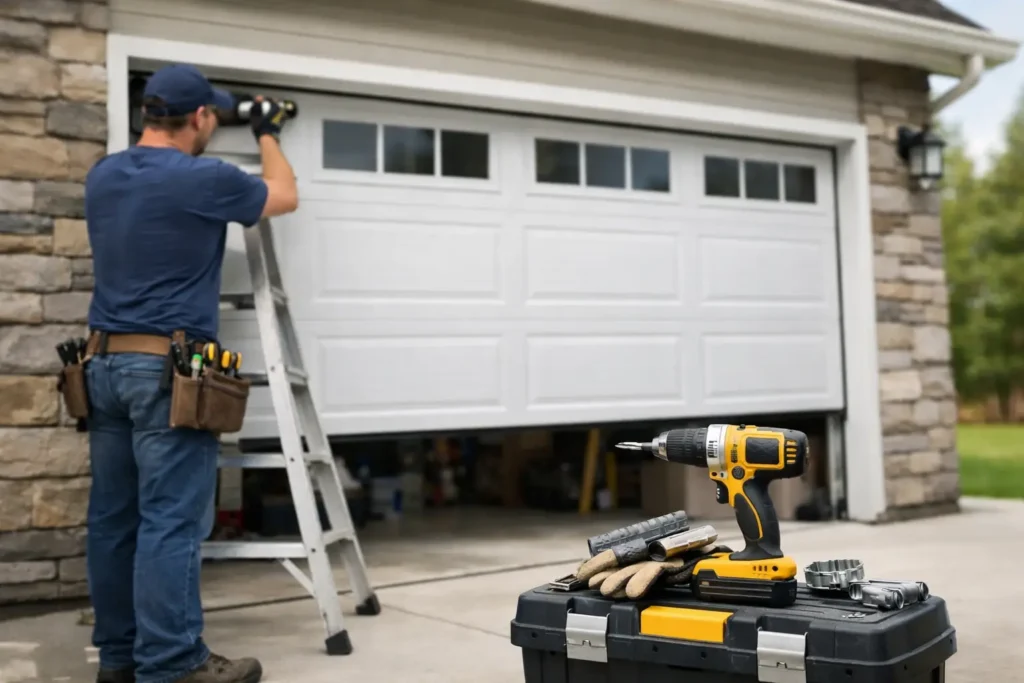
Before installation, a technician should inspect the door’s balance, spring condition, cable condition, track alignment, rollers, hinges, and safety sensor placement. The opener rail and mounting point must also be secure. A ceiling-mounted motor that is poorly supported can vibrate, operate noisily, and cause preventable damage over time.
For Ohio homes, weather seals and insulated doors also affect day-to-day performance. Cold weather can stiffen lubricants and expose worn parts, while moisture can contribute to corrosion. Seasonal maintenance helps the whole system operate more reliably, including the opener.
When It Is Time to Replace the Opener
Consider replacement if the opener reverses without explanation, struggles with a properly balanced door, makes grinding or clicking sounds, loses remote programming repeatedly, or lacks required safety features. An older unit may still run, but dependable operation and current safety protections should guide the decision.
If your door stops working unexpectedly, avoid repeatedly pressing the remote or trying to force the door. Disconnecting the opener incorrectly or handling springs and cables can lead to injury. Same-day professional service is the safer answer when the door is stuck, off track, or unsafe to operate.
The right garage door opener should make daily life quieter, safer, and less stressful. Choose the features that fit how you use the garage, then have the complete door system inspected and installed by certified technicians. A properly matched opener is not just convenient – it is dependable when you need it most.