That strip of rubber at the bottom of your garage door usually gets ignored until the first hard rain pushes water under the door, or a January draft makes the garage feel like a freezer. Garage door weather seal replacement is one of those small jobs that has a big effect on comfort, cleanliness, and how well your door stands up to Ohio weather.
A worn seal does more than let in cold air. It gives moisture, leaves, dust, and pests an easy way inside. If your garage is attached to your home, that outside air can also affect nearby rooms and force your heating system to work harder. For homeowners and property managers, replacing a failing weather seal early is a simple way to prevent bigger headaches.
When garage door weather seal replacement is needed
The most obvious sign is daylight showing beneath the closed door. If you can see a gap, the seal is no longer doing its job. Sometimes the gap runs all the way across. More often, it shows up at the corners or in the center because the seal has flattened, cracked, or pulled loose over time.
Water intrusion is another clear warning. If you notice a damp line just inside the garage after rain or melting snow, the bottom seal may be brittle or uneven. In this part of Ohio, freeze-thaw cycles are especially hard on rubber and vinyl components. A seal that looked acceptable in fall can fail once winter really sets in.
You may also hear or feel the problem before you see it. A draft near the floor, more dust blowing in, or insects getting into the garage can all point to a damaged weather seal. If the door closes but still leaves a slight opening against the floor, the issue could be the seal itself, the door alignment, or both.
What the weather seal actually does
Most people think only about the bottom strip, but garage door sealing is a system. The bottom seal compresses against the floor when the door closes. Side and top weatherstripping help close the perimeter around the door opening. When all of those parts are in good shape, they reduce air leaks and keep the garage better protected from the elements.
The bottom seal has the hardest job. It has to flex every time the door opens and closes, stay pliable through hot summers and cold winters, and conform to minor uneven spots in the concrete. Over time, it loses elasticity. Once that happens, the door may still operate normally, but the barrier at the floor is gone.
That is why garage door weather seal replacement is not just cosmetic maintenance. It protects the lower edge of the door, helps control moisture, and supports overall door performance. It will not turn a garage into a fully conditioned living space, but it does make the space cleaner, drier, and more stable.
Not every bad seal is just a bad seal
This is where experience matters. Sometimes the seal is clearly torn or missing, and replacement solves the problem. Other times, the seal is only part of what you are seeing.
If the garage floor has settled, one side of the opening may sit lower than the other. If the door is out of adjustment, the bottom section may not sit evenly when closed. Bent tracks, damaged rollers, and worn hinges can also affect how the door meets the floor. In those cases, replacing the seal alone may help a little, but it will not fully fix the gap.
That is why a good inspection matters before the work starts. A qualified technician will look at the seal, the retainer, the bottom section of the door, and the door’s closing position as a whole. The goal is not just to install new material. The goal is to make sure the door seals properly and safely.
Types of garage door bottom seals
There is no one-size-fits-all seal. Garage doors use different retainer styles and seal profiles, and using the wrong one can lead to poor fitment or early failure.
Some doors use a T-style bottom seal that slides into a metal track. Others use bulb-style or bead-style seals designed to compress against the floor. Commercial doors may use heavier-duty materials depending on the size and usage of the opening. The right choice depends on the door model, the retainer shape, and the condition of the floor beneath the door.
Material also matters. Some seals stay flexible better in cold weather, while others wear faster when exposed to repeated use or direct sun. In northwest and west-central Ohio, where a garage door may face snow, slush, wind, and summer heat in the same year, durability matters more than picking the cheapest strip on the shelf.
Can you replace a garage door weather seal yourself?
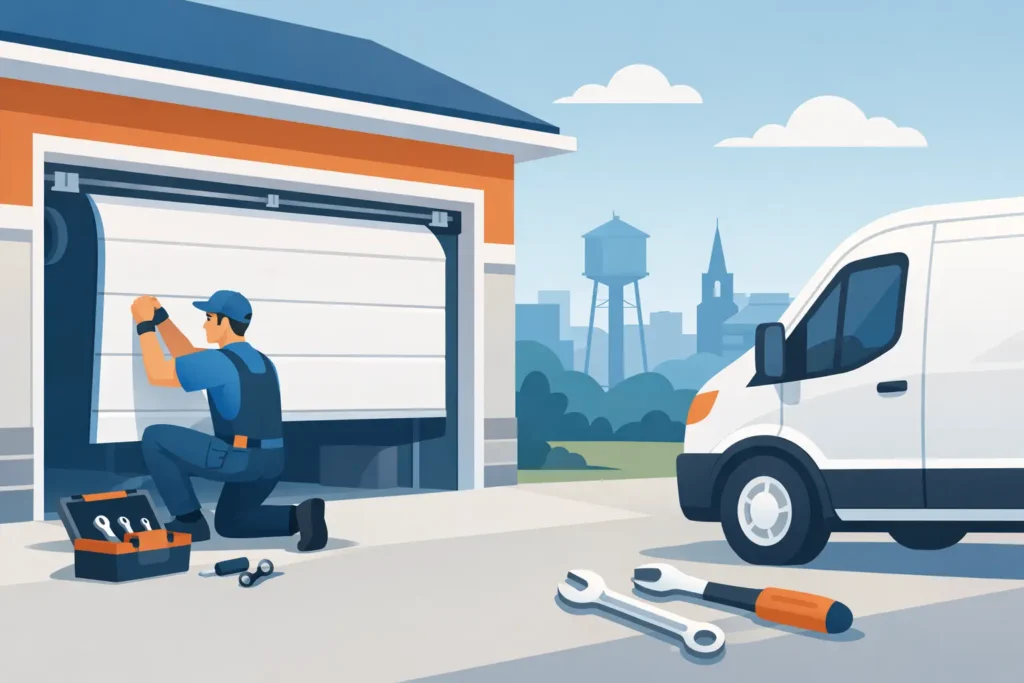
Sometimes, yes. If the door is in good condition, the retainer is not bent, and the replacement seal matches the existing system, a handy homeowner may be able to change it. The job usually involves removing the old seal, cleaning the track, sliding in the new material, and trimming it to fit.
But there are a few catches. Older seals can stick inside the track and tear apart during removal. Retainers can be damaged or rusted. On some doors, the bottom edge is harder to access than expected. And if the real issue is door alignment instead of the seal alone, a do-it-yourself replacement may not solve the draft or water problem.
There is also the safety side. Replacing the bottom seal itself does not usually involve spring work, but many homeowners start adjusting other parts once they notice the door is not sitting right. That is where things get risky fast. Tracks, cables, and torsion spring components should never be treated like trial-and-error repairs.
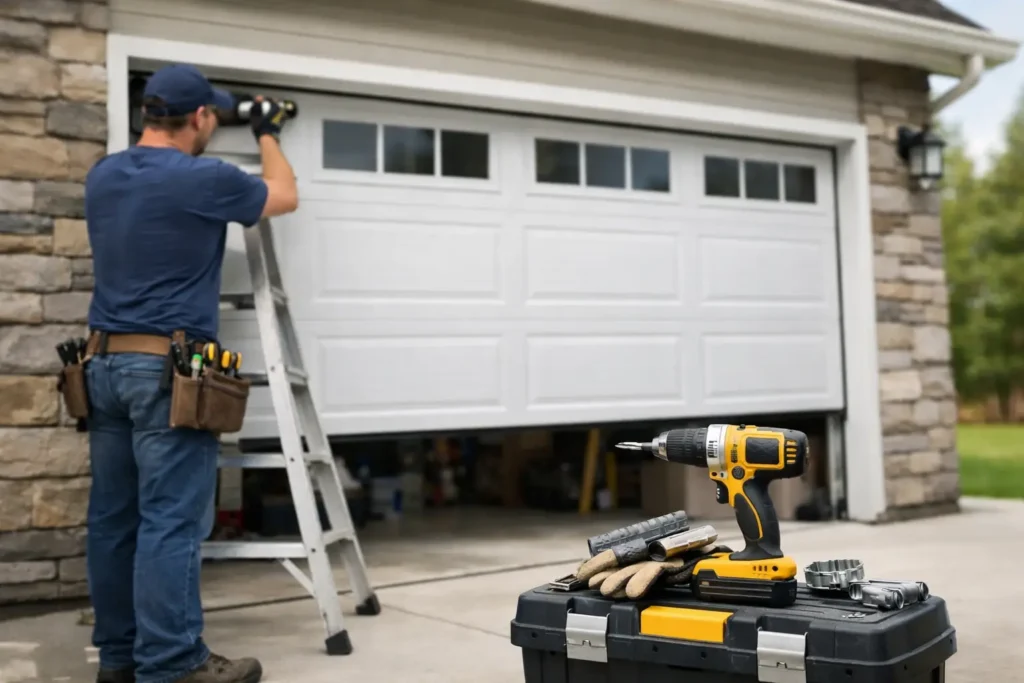
If you want the job handled correctly the first time, professional service is often the better call. A trained garage door technician can identify whether the weather seal is the only issue or whether the door needs adjustment, track correction, or additional weatherstripping.
Why Ohio weather is hard on garage door seals
Garage doors in this region do not get an easy life. Winter brings snow, ice, and prolonged cold that can harden rubber and make cracks spread faster. Spring adds heavy rain and temperature swings. Summer heat can dry out lower-quality materials, especially on doors with full sun exposure.
Road salt and grit add another layer of wear. As vehicles pull in and out, moisture and debris collect right where the seal contacts the floor. That constant abrasion shortens the life of the material and can also affect the retainer at the bottom of the door.
For homes in Wapakoneta and nearby communities, garage door weather seal replacement is often part of keeping the entire door system ready for the season ahead. It is not a dramatic repair, but it is one of the most practical ones.
What professional replacement should include
A proper service visit should do more than swap out a strip of rubber. The technician should confirm the correct seal type, inspect the retainer, and check whether the door closes evenly across the floor. If side or top weatherstripping is also worn, that should be pointed out clearly so you can make an informed decision.
The lower section of the door deserves attention too. If moisture has been getting in for a while, steel doors may show rust near the bottom edge and wood doors may start to soften or swell. Catching that early can prevent more extensive repairs later.
The best service companies also test the door after replacement to make sure it opens and closes smoothly, the seal compresses as intended, and the system is still operating safely. That matters because a garage door is not just an exterior panel. It is a heavy moving system that needs to stay properly balanced and dependable.
Don’t wait for a small gap to become a bigger problem
A failing weather seal rarely fixes itself. It usually gets worse one storm, one freeze, and one season at a time. If you have noticed water under the door, a draft near the floor, or visible gaps when the door is closed, it is worth having it checked before that moisture starts affecting stored items, flooring, or the door itself.
For many properties, this is a straightforward repair. For others, it is the first sign that the door needs adjustment or additional service. Either way, the right next step is the same – get a clear diagnosis from an experienced local garage door professional who knows what Ohio weather does to these systems and how to keep them sealed, safe, and working the way they should.
A tight seal at the bottom of your garage door is easy to overlook, right up until the day you realize how much trouble that small gap has been letting in.