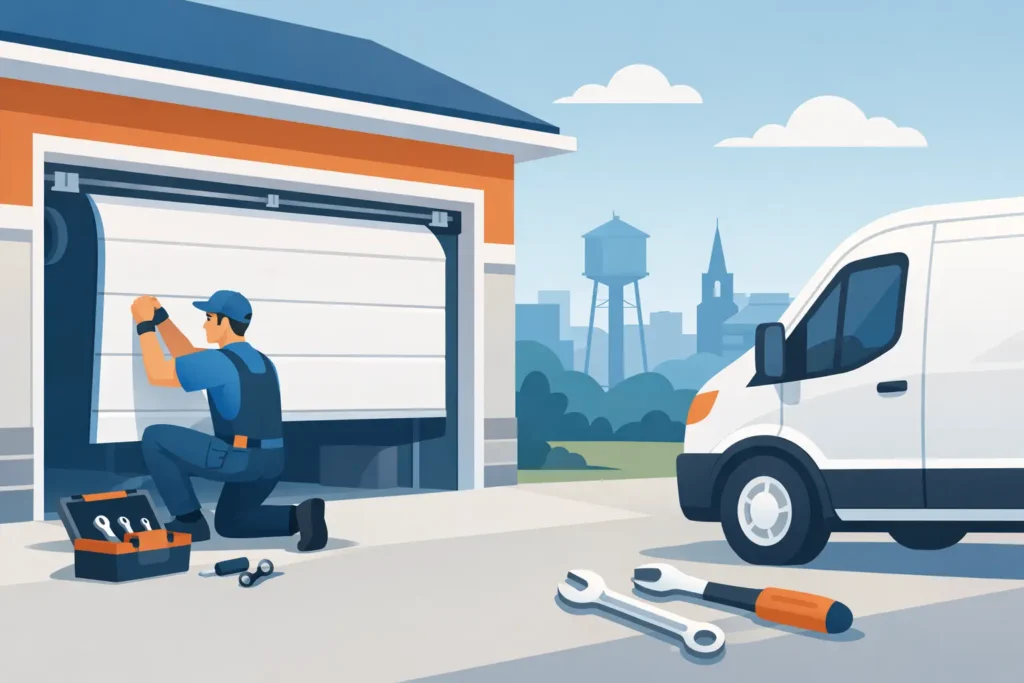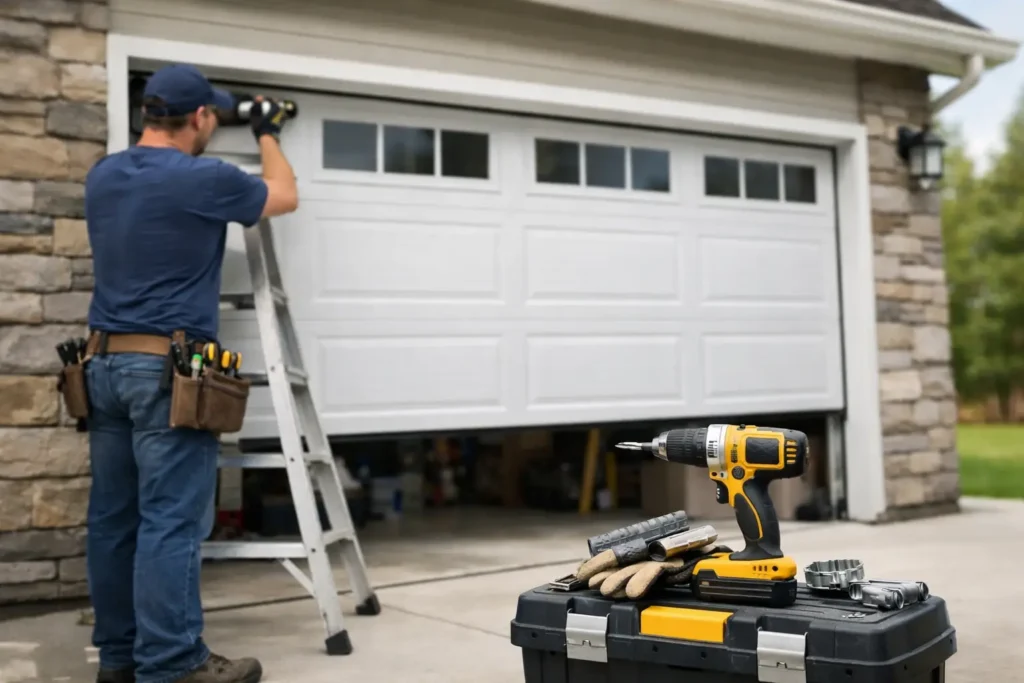
One morning the garage door opens halfway, shudders, and stops. Later that same day, it slams shut harder than usual or refuses to close at all. That is usually how the top signs garage door failing show up – not as one dramatic breakdown, but as a series of small warnings that get worse fast.
A failing garage door is more than an inconvenience. It can leave your home exposed, strain the opener, damage panels and tracks, and create a real safety issue for your family. If you catch the warning signs early, you often prevent a bigger repair and avoid the kind of sudden failure that traps your car inside or leaves the door hanging crooked.
Top signs your garage door is failing
The clearest sign is a change in normal operation. If your garage door used to open smoothly and quietly but now jerks, drags, squeals, or hesitates, something in the system is no longer working the way it should. Garage doors are heavy and depend on multiple parts working together. When one part starts wearing out, the rest of the system feels it.
A loud garage door is one of the first problems many homeowners notice. Grinding, popping, screeching, or banging sounds are not just annoying. They often point to worn rollers, loose hardware, spring stress, opener problems, or track misalignment. Some noise can come from minor wear, but sharp or sudden sounds usually mean the system needs professional attention.
Slow movement is another common warning. If the door takes longer than usual to open, pauses during travel, or seems to struggle at certain points, that often means the opener is under stress or the door is no longer balanced correctly. In Ohio, cold weather can make existing issues worse by stiffening moving parts and exposing weak springs and aging seals.
A door that looks uneven while opening or closing should never be ignored. If one side rises faster than the other, or the door appears crooked in the opening, that can signal a cable issue, track problem, or spring failure in progress. This is one of the more serious top signs garage door failing because the door may become unstable without much warning.
When the problem is the door, not just the opener
Many property owners assume the opener is the issue because the remote stops working or the motor sounds strained. Sometimes that is true. But just as often, the opener is reacting to a door system that has become too heavy, unbalanced, or obstructed.
If the opener runs but the door barely moves, the issue may be a broken spring, a disconnected trolley, or a door that is binding in the tracks. If the opener reverses for no clear reason, the safety sensors could be misaligned, but it can also happen when the door meets resistance from damaged rollers, bent track sections, or panel warping.
This is where experience matters. Replacing an opener will not fix a failing spring, a frayed cable, or a compromised track. In fact, a new opener connected to a bad door system can wear out early. A proper inspection looks at the full system, not just the motor on the ceiling.
A heavy or hard-to-lift door is a serious warning
If your garage door suddenly feels unusually heavy when operated manually, stop using it until it is checked. That often means the spring system is failing or already broken. Springs carry most of the door’s weight. When they weaken, the opener has to work harder, and the door becomes dangerous to lift or lower.
Homeowners sometimes notice this after a loud snap from the garage. Others first see a gap in the torsion spring above the door. Either way, spring issues are not a do-it-yourself repair. These parts are under high tension and can cause severe injury if handled incorrectly.
Shaking, jerking, or vibrating during travel
A garage door should move in a controlled, steady path. If it shakes, rattles, or jerks as it moves, that points to wear somewhere in the system. The cause might be loose brackets, worn rollers, bent tracks, failing hinges, or balance issues.
Sometimes the fix is straightforward. Other times, the shaking is a symptom of multiple parts wearing out together. Older doors especially can develop several smaller issues that add up to rough operation. That is why a quick adjustment without a full inspection does not always solve the problem for long.
Visual damage that points to bigger trouble
Not every warning sign is mechanical. Sometimes the most obvious clues are right in front of you. Cracked or bent panels, rusted hardware, loose hinges, frayed cables, and worn bottom seals all tell you the door system is aging or under strain.
Panel damage matters more than many people think. A dented panel can affect how the door tracks and seals. On some doors, one damaged section can put extra stress on adjoining panels and moving hardware. If the damage is minor, a panel replacement may make sense. If the door is older or the structure is compromised, replacement may be the smarter long-term move.
Rust around springs, bearings, or track brackets is another sign worth taking seriously, especially in areas where moisture, road salt, and freeze-thaw cycles are part of the season. Surface rust may be manageable, but corrosion on critical components can weaken the system and speed up failure.
Gaps, drafts, and water getting in
A failing garage door does not always stop moving. Sometimes it still operates, but no longer seals the opening correctly. If you notice daylight around the edges, water coming in under the door, or cold drafts in winter, the door may be warped, out of alignment, or dealing with worn weather seals.
For homeowners in and around Wapakoneta, that matters for more than comfort. Poor sealing can let in moisture, dirt, pests, and freezing air that affects the garage and the rooms next to it. It can also signal that the door is no longer sitting square in the opening, which often ties back to mechanical wear.
Safety issues are the biggest red flag
The most serious top signs your garage door is failing are the ones that affect safe operation. If the door drops too quickly, slams shut, reverses unpredictably, or does not stop when it should, stop using it until it is inspected.
Modern garage doors have safety features designed to reduce injury and property damage. But those features only work when the system is set up correctly and the hardware is in good condition. Faulty sensors, incorrect force settings, worn springs, and damaged tracks can all make the door unsafe.
This is especially important for households with children, pets, or frequent garage traffic. A garage door is one of the largest moving systems in your home. When it starts acting unpredictably, it is not a wait-and-see situation.
Frequent breakdowns mean the system is wearing out
If you have already had the same door serviced multiple times in a short period, pay attention to the pattern. Repeated problems often mean the system is nearing the point where repair after repair is no longer the best answer.
That does not automatically mean full replacement. Sometimes one failing component has been causing stress on everything else, and fixing that root issue restores reliable operation. But when springs, rollers, panels, tracks, and the opener are all showing their age, continuing to patch the system can leave you with more downtime and more frustration.
A good technician will tell you the difference. The right recommendation depends on the age of the door, the condition of the hardware, how often the door is used, and whether the structure itself is still sound.
What to do if you notice these warning signs
Start with caution. Do not stand under a door that is moving unevenly or force a struggling opener to keep cycling. If the door is heavy, crooked, or making sharp noises, stop using it and have it inspected. Waiting can turn a manageable repair into a more serious failure.
Professional service is not just about convenience. It is about diagnosing the actual cause, checking the full system, and making sure the door is safe to use afterward. A trained garage door technician can inspect springs, cables, rollers, tracks, panels, sensors, and opener settings as one connected system.
For homeowners and property managers, the best time to act is when the warning signs first appear, not after the door quits completely. If your garage door is noisier, slower, heavier, or less predictable than it used to be, trust what you are seeing. Garage doors rarely fix themselves, but catching the problem early can save you a much bigger headache later.