A loud bang from the garage often gets mistaken for something falling off a shelf. Then you hit the wall button, the door jerks a few inches, and nothing good happens after that. A garage spring repair example helps make sense of this fast, because when a spring fails, the whole door system can become unsafe in seconds.
Most homeowners never see the spring system until it breaks. That is normal. Springs do their job quietly for years, then one day the door feels unusually heavy, the opener strains, or the cables look loose. At that point, the question is not just what broke. It is whether the door can still be operated safely and what a proper repair should actually include.
A real garage spring repair example
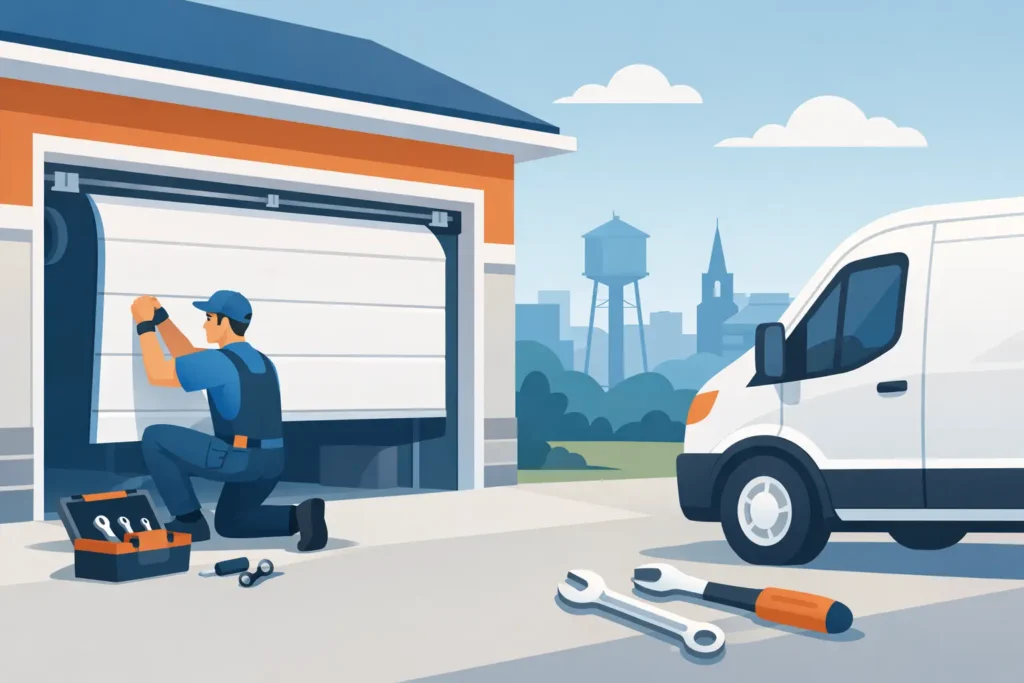
Picture a standard two-car attached garage with a steel sectional door. The homeowner hears a sharp snap early in the morning and later notices the door will only open about six inches before stopping. The opener hums, the top section flexes slightly, and the door settles back down.
On inspection, one torsion spring above the door has a clean two-inch gap in the coil. That gap is the giveaway. The spring has broken under tension, which means the door has lost a large part of the counterbalance that helps it lift smoothly. The opener was never designed to do all the heavy lifting by itself.
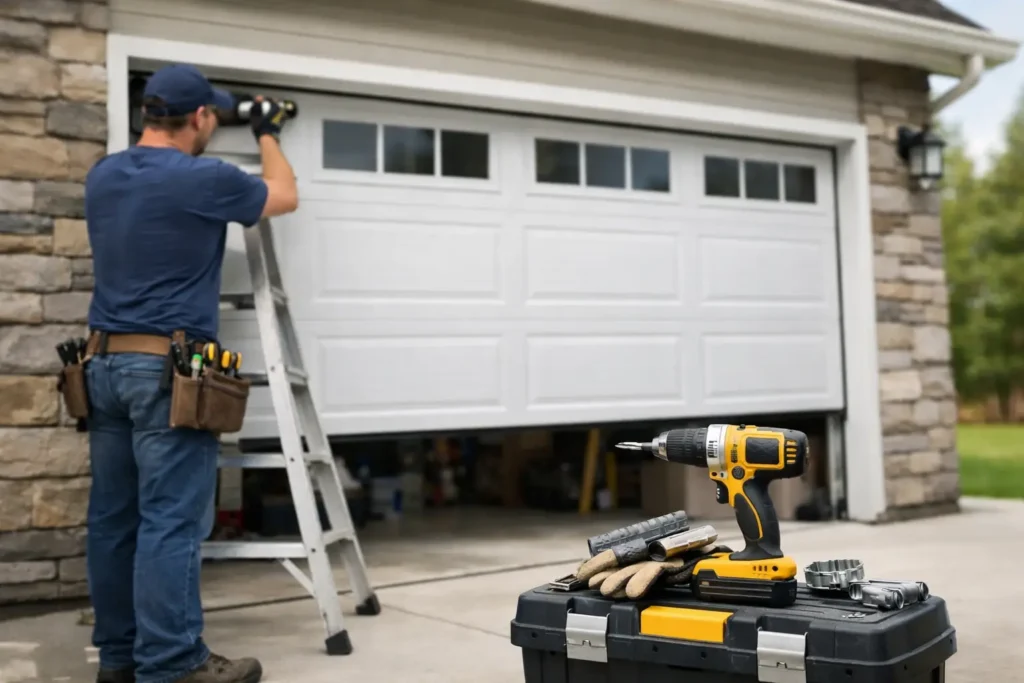
In a case like this, a trained technician does not just swap one visible part and leave. The repair starts with securing the door, disconnecting the opener if needed, and confirming whether the system has one spring or a matched pair. If the door uses two torsion springs, both are usually near the same age and wear level. One may have snapped today, but the other is often close behind.
Next comes a full check of the related hardware. That includes the center bearing, end bearing plates, shaft, drums, cables, brackets, and track alignment. A broken spring can put extra stress on all of them. If the opener kept trying to lift the door after the failure, there may also be strain on the trolley, rail, or gear components.
Once the correct replacement springs are selected for the door’s weight and height, the old springs come off, the new ones are installed, and the system is wound to the right tension. Then the technician balances the door by hand. This part matters. A properly repaired door should stay near mid-height when tested, not slam down or shoot upward. After that, opener force and travel settings can be checked and adjusted if necessary.
That is what a complete repair looks like. It is not guesswork, and it is not just about getting the door moving again. It is about restoring safe, controlled operation.
Why springs fail in the first place
Most spring failures come down to cycle life. Every open-and-close counts as one cycle, and over time the steel simply wears out. If your household uses the garage as the main entry point, those cycles add up faster than most people realize.
Ohio weather does not help. Cold snaps can make already stressed metal more likely to fail, and humidity can speed up corrosion if the springs are not in good condition. In places like Wapakoneta and nearby communities, seasonal swings put garage door systems through more stress than many homeowners expect.
There are other causes too. Incorrect spring sizing is a common one. If a past repair used the wrong spring for the door, the system may have operated, but not correctly. Poor balance, worn bearings, and neglected maintenance also shorten spring life. Sometimes the symptom shows up before the break – a crooked door, jerky movement, or a door that feels heavier than it used to.
What homeowners usually notice before calling
The most common signs are fairly consistent. The door may stop halfway, open unevenly, or refuse to lift at all. You might hear a bang from the garage, see a visible gap in the torsion spring, or notice cables that appear slack or off the drum. In extension spring systems, a spring may look stretched out or separated.
Another warning sign is opener strain. If the motor sounds like it is working harder than usual, do not keep cycling the door to test it. That can turn one repair into several. A broken spring often makes the opener fight against the full weight of the door, and that can damage components that were fine before.
If the door is stuck open, the situation becomes more urgent. A door that cannot close securely is a safety issue and a property security issue. If it is stuck closed and your vehicle is trapped inside, same-day service becomes more than a convenience.
Why spring repair is not a DIY job
Garage door springs store serious tension. Releasing or winding that tension the wrong way can cause severe injury or major property damage. This is one of the few home repairs where confidence and online videos can create a dangerous mix.
Even if someone manages to remove and replace a spring, the job is still not done unless the replacement is correctly matched and the door is balanced. Too much tension, too little tension, wrong wire size, wrong length, or poor winding can all create unsafe operation. The door may move, but that does not mean it is fixed.
There is also the issue of what else was affected by the failure. Homeowners usually focus on the broken spring because it is obvious. Experienced technicians look at the whole system because that is where repeat failures and hidden risks show up.
What a professional repair should include
A proper service call should begin with diagnosis, not assumptions. The technician should identify the spring type, confirm door weight requirements, inspect safety components, and test door balance after the repair is complete.
For torsion systems, that means checking shaft hardware, cable drums, lift cables, bearings, and mounting points. For extension systems, it means checking pulleys, safety cables, and wear points that can affect travel and stability. In either case, opener settings should be verified once manual door balance is restored.
This is also where experience matters. A seasoned local company knows the difference between a clean spring failure and a system that has been operating out of balance for months. They can spot when a door section is beginning to crack, when rollers are adding drag, or when a commercial setup needs a heavier-duty solution than a residential-style quick fix.
Garage spring repair example vs. full system replacement
Sometimes spring replacement is the right answer and nothing more is needed. Other times, the spring problem is just the most visible part of a larger issue. If the door is older, heavily rusted, damaged by impact, or paired with a failing opener, it may make sense to look at the full system rather than repairing one major part at a time.
That does not mean every older door needs to be replaced. Far from it. Many doors get years of additional life from a well-executed spring repair and a few supporting corrections. But this is where honest assessment matters. A trustworthy technician should explain whether the spring failure is isolated or part of a broader reliability problem.
For property managers and small commercial operators, downtime matters too. A service bay or shared garage that cannot open on schedule affects more than convenience. In those situations, fast diagnosis and durable repair are usually more important than short-term patchwork.
When to call right away
Call for service immediately if the door is crooked, dropped suddenly, will not stay open, or is hanging with loose cables. The same applies if you heard a spring break and the opener is still trying to lift the door. Stop using it until it has been inspected.
If you are dealing with an emergency, look for a company that offers same-day response, licensed and insured technicians, and clear communication about what they found. Safety-critical repairs should not feel vague or rushed. You want a crew that can explain the issue in plain language and fix it correctly the first time.
For homeowners in this area, local experience matters more than people think. A company that regularly handles spring failures in western Ohio understands how weather, door usage, and aging hardware tend to show up in real homes and buildings here. That kind of experience speeds up diagnosis and helps prevent repeat problems.
A broken garage spring always feels sudden, but the right repair follows a clear process. If your door is heavy, uneven, or simply not acting like itself, treat that as a warning sign instead of an inconvenience. The safest next step is to have it inspected before a manageable repair turns into a bigger failure.