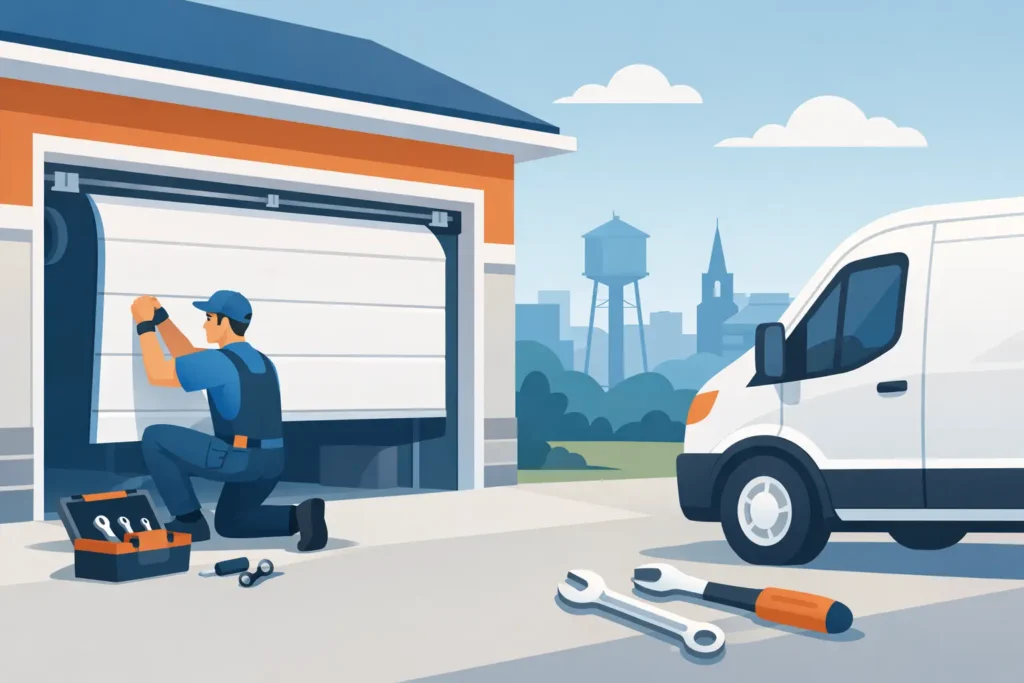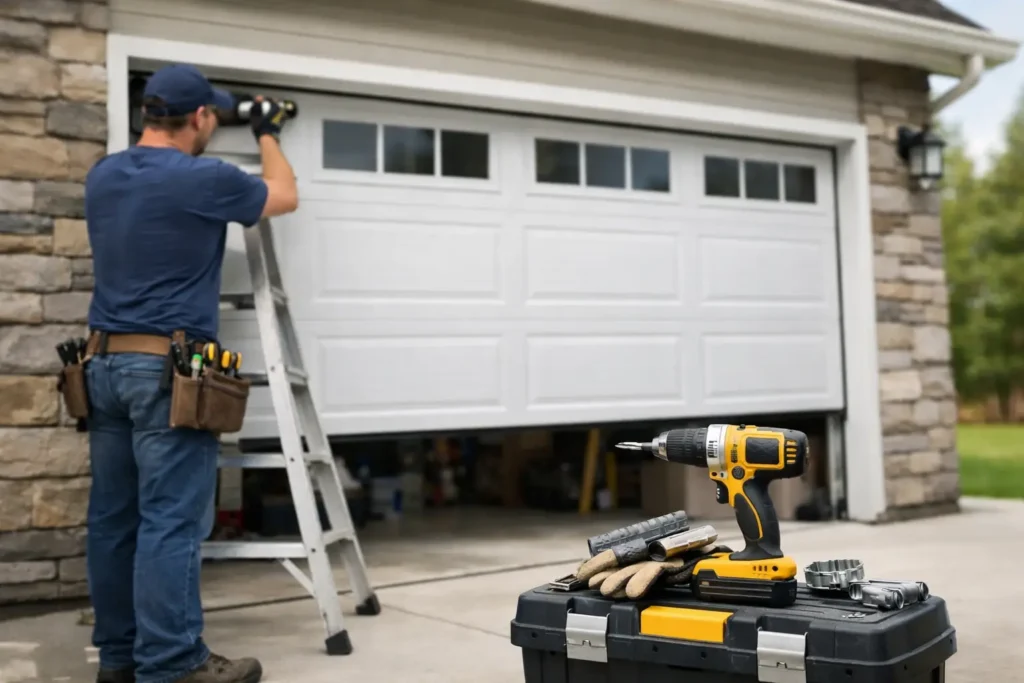
A garage door opener usually gives you a warning before it quits. The remote starts working only sometimes. The door hesitates halfway up. The motor hums, but nothing moves. When that starts happening, garage door opener repair is not something to put off for later. A failing opener can leave your car trapped, your home unsecured, or your door operating in a way that is simply not safe.
For most homeowners, the opener is the part of the system they notice first, but it is not always the part that actually failed. That is where experienced diagnosis matters. An opener problem can come from the motor, the safety sensors, the logic board, the rail, the drive system, or a completely different door component that is forcing the opener to work harder than it should. If the issue is identified correctly the first time, the repair is faster, safer, and far more likely to last.
When garage door opener repair is the right move
Not every opener issue means the whole unit needs to be replaced. Many opener problems are repairable, especially if the motor is still in good condition and the system has not suffered major electrical damage. A technician may be able to restore normal operation by replacing worn gears, adjusting travel and force settings, correcting sensor alignment, repairing wiring, or resolving a problem with the wall control or receiver.
That said, it depends on the age of the opener, the severity of the failure, and the condition of the rest of the door system. If an opener has been straining against a poorly balanced door for months, the visible problem may be the opener, but the root problem may include springs, rollers, or tracks. Repairing one part without addressing the load on the system can lead to repeat breakdowns.
That is why a proper service call should not stop at the symptom. It should answer a more important question – why did the opener start failing in the first place?
Common signs your opener needs service
Some opener failures are sudden, but many start small. The door may reverse for no clear reason, make a grinding noise, or refuse to close unless you hold the wall button down. Those are not harmless quirks. They are signs that the opener is losing reliability.
If your garage door moves unevenly, closes partway and reopens, or responds slower than normal, there may be an issue with sensor communication, limit settings, or internal wear. If the opener light flashes and the door does not move, the unit may be signaling a safety fault. If you hear the motor run but the door stays in place, the drive gear, trolley, or connection to the door may have failed.
Intermittent problems are especially frustrating because they tempt people to ignore them. In Ohio, changing temperatures, moisture, and seasonal contraction can turn a minor opener issue into a full failure at the worst time. A system that barely works on a mild afternoon may stop working entirely on a cold morning.
What causes opener problems
Garage door openers are mechanical and electrical systems working together. When one side slips out of spec, the whole unit can struggle.
Sensor issues are one of the most common causes of service calls. If the photo eyes are dirty, bumped, misaligned, or affected by damaged wiring, the opener may refuse to close the door. This is a safety feature doing its job, but it still needs professional attention if the fault keeps returning.
Worn internal gears are another frequent issue, particularly on older chain-drive and belt-drive units. Over time, normal use breaks down components inside the motor housing. You may hear the motor run with little or no door movement, or notice jerky starts and stops.
Electrical problems can also be the source. A bad logic board, failed capacitor, damaged circuit, or inconsistent power supply can cause odd behavior that looks random from the outside. These are the kinds of issues that require testing, not guesswork.
Then there is the hidden problem many property owners do not expect – the opener is not strong enough to overcome resistance somewhere else in the door. A door with worn rollers, bent track, binding sections, or spring imbalance puts excess strain on the opener every time it cycles. In that case, opener repair may be part of the solution, but not the whole solution.
Why DIY garage door opener repair has limits
There are a few safe basics a homeowner can check, like replacing remote batteries, making sure the opener is plugged in, or clearing debris from around the safety sensors. Beyond that, caution matters.
Garage doors are heavy. Openers are tied into moving parts, electrical components, and doors that may be under spring tension. Even if the opener itself is not the dangerous part, the system it operates can be. A door that is out of balance can drop unexpectedly. A misdiagnosed issue can lead to more damage. And replacing parts without confirming the real cause often wastes time while the door gets less reliable.
This is especially true when the problem seems to come and go. Intermittent opener faults usually need a trained eye, proper tools, and a step-by-step inspection of the full system. A quick fix that ignores the real failure point is how a convenient repair turns into an emergency call later.
What a professional opener repair service should include
A good garage door opener repair visit should start with a full inspection, not just a glance at the motor unit. The technician should check the opener, door balance, spring tension, rollers, track condition, safety sensors, wall controls, remotes, wiring, and reversing function.
That matters because openers do not work alone. If the door is binding or the springs are no longer carrying the proper load, the opener may be blamed for a mechanical issue elsewhere. A complete diagnosis protects the opener and the rest of the door system.
Once the cause is confirmed, the repair should be clear and specific. That may involve sensor realignment, gear replacement, travel adjustment, circuit repair, trolley replacement, or correcting a damaged drive component. After the repair, the system should be tested through full open and close cycles to make sure the door moves smoothly and the safety features respond the way they should.
For homeowners and property managers, the real value is confidence. You want to know the door is not just working again, but working safely.
Repair or replace? It depends on the opener
Sometimes repair is the smart move. Sometimes replacement makes more sense. The right answer depends on age, condition, brand support, and whether the opener still matches the needs of the property.
If the opener is relatively modern and the problem is isolated, repair is often worthwhile. If the unit is older, missing current safety features, or suffering repeated breakdowns, replacement may be the better long-term decision. This is especially true if replacement parts are harder to source or if the opener has already been stressed by an unbalanced door.
A trustworthy technician should be direct about that. Not every older opener needs to be replaced immediately, but not every opener is worth sinking more time into either. The goal is reliable operation, not a temporary patch.
Why local experience matters with opener service
Garage door systems in this region deal with temperature swings, humidity, wind, and winter conditions that put extra stress on moving parts and electronics. A technician who works on these systems every day understands how local weather affects sensor performance, track alignment, lubrication, and opener strain.
That kind of experience matters when you need fast answers. It also matters when the issue is not obvious. A seasoned local company knows the common failure patterns, the major opener brands, and the service standards homeowners expect when a door stops working without warning.
If you are in or near Wapakoneta and your opener starts acting up, quick service is not just about convenience. It is about preventing a smaller repair from turning into a disabled door, a security problem, or a safety risk.
How to reduce future opener problems
The best way to protect an opener is to keep the entire door system in good operating condition. That means paying attention when the door sounds different, moves unevenly, or becomes harder to open manually. Those changes usually show up before a total failure.
Routine service can catch worn rollers, loose hardware, balance issues, and sensor problems before they start overworking the opener. It also gives a trained technician a chance to inspect the unit’s settings and verify that the auto-reverse and photo-eye systems are functioning correctly.
If your opener is already showing signs of trouble, waiting rarely improves the situation. Most opener problems get worse with use, especially when the system is straining through every cycle.
A garage door should open when you need it, close securely when you leave, and operate safely every time. If your opener is not doing that, the smartest next step is to have it checked by a trained professional who can fix the real problem and get the whole system back on solid ground.