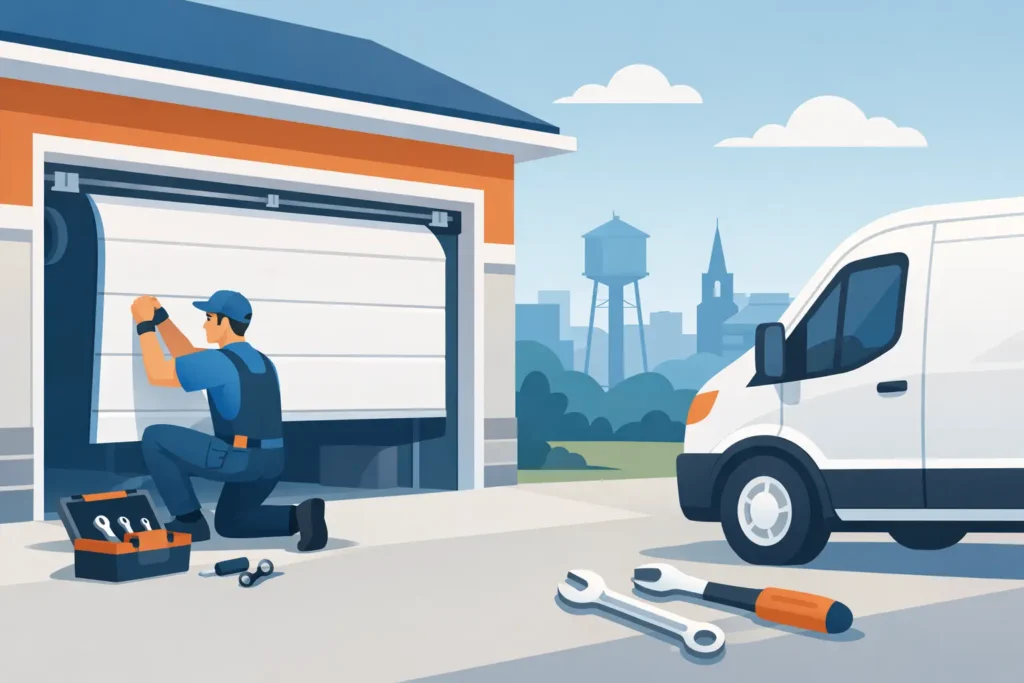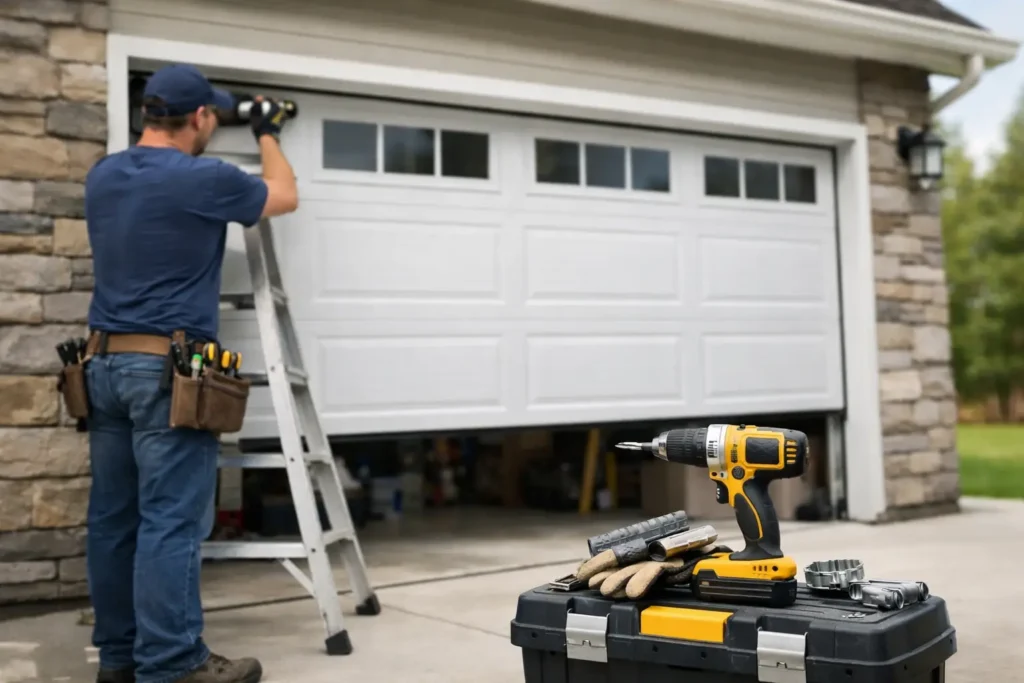
A garage door that stops halfway, hangs crooked, or will not close is more than an inconvenience. It can leave your home exposed, trap a vehicle, or create a serious injury risk. Knowing how to secure a stuck garage door protects your family and property while a qualified technician is on the way. The goal is not to force the door back into operation. The goal is to keep it from moving unexpectedly and prevent anyone from using an unsafe opening.
Treat a Stuck Door as a Safety Issue First
A typical residential garage door can weigh well over 100 pounds, and its springs, cables, tracks, and rollers work under significant force. When one part fails, the door may be unbalanced even if it looks mostly normal. A broken spring, loose cable, bent track, damaged roller, or failing opener can all leave the door stuck.
Keep children, pets, visitors, and vehicles clear of the garage door until the problem is diagnosed. Do not stand or walk beneath a door that is open, partially open, or tilted to one side. A door that appears to be holding still can drop without warning if a cable slips or a spring fails completely.
If the door is hanging crooked, has a loose cable, or is visibly off its tracks, stop immediately. Do not press the wall button repeatedly, use the remote again, or try to lift the door by hand. Repeated operation can worsen damage and make a straightforward repair more involved.
How to Secure a Stuck Garage Door That Is Partly Open
A partially open door is the most urgent situation because it creates both a safety concern and a security gap. If the door is stuck several feet above the floor, do not drive a vehicle under it or attempt to squeeze underneath. Move people away from the opening and call for emergency garage door repair.
If the opener is still connected and the door has stopped unexpectedly, turn off power to the opener at the wall outlet or the garage circuit if it is safe to do so. This prevents someone from accidentally activating the opener with a remote or wall control. Do not pull the red emergency release cord on a door that is open or under strain. Releasing the trolley can allow an unbalanced door to fall.
Avoid placing ladders, boards, vehicles, or heavy objects under the door in an attempt to hold it up. These makeshift supports can shift, and they put anyone nearby in the path of the door. A trained technician can secure the door properly, identify whether the issue involves springs, cables, tracks, or the opener, and get it operating safely.
Until help arrives, keep the overhead door area off-limits. Lock the door between the garage and home, move accessible valuables away from the opening if you can do so without going beneath the door, and use exterior lighting or a camera if the garage must remain exposed overnight.
Secure a Door That Is Stuck Closed
A garage door stuck in the closed position is usually less dangerous, but it still should not be forced. If the door will not open, first make sure no one keeps trying the opener. Unplug the opener or switch off its power to prevent repeated commands from straining the motor, belt, chain, or door hardware.
Check whether the manual slide lock on the inside of the door has been engaged. This is a common cause of a door that hums or strains but will not rise. If the lock is clearly engaged and the door is fully closed, you can disengage it and test the opener once. If it still will not move normally, stop there.
Do not pull hard on the emergency release handle or try to lift a heavy door alone. A broken spring can make the door feel far heavier than it should, and lifting it can cause injury. If you need a vehicle inside the garage, arrange another way to get where you need to go and schedule same-day service rather than forcing the system.
A closed door may still have a security concern if it is damaged, has a gap along the bottom, or has a broken panel. Lock the interior access door to the house and keep remotes out of vehicles parked outside. If the main door cannot be fully secured, a professional can assess temporary protection and recommend the right repair or replacement.
Do Not Bypass Safety Sensors or Force the Opener
Homeowners often notice that the opener lights flash or the door reverses before it closes. This can point to misaligned photo-eye sensors, an obstruction, dirty sensor lenses, damaged wiring, or a door that is binding in the tracks. Clear obvious objects from the sensor path and gently wipe the lenses with a soft cloth.
If that does not correct the problem, do not bypass the sensors, tape them in position, or hold down the wall button to force the door closed. Those safety features are designed to prevent the door from closing on a person, pet, or object. A door that will only move when the wall button is held may need professional adjustment or repair.
The same rule applies to an opener that hums, grinds, or strains. The opener is not meant to pull a jammed or severely unbalanced door through a mechanical failure. Continuing to operate it can damage the opener and leave the door in a more hazardous position.
Never Handle Springs, Cables, or Bottom Brackets
Garage door springs and lift cables are not do-it-yourself components. Torsion springs above the door and extension springs along the tracks store enough energy to cause severe injuries when handled incorrectly. The bottom brackets attached to the lower corners of the door are also connected to the lift cables and should never be loosened.
A visible cable off the drum, a snapped spring, a gap in a torsion spring, or a door that rises only a few inches are strong signs that you need a trained technician. Do not attempt online repair shortcuts involving winding bars, locking pliers, or cable adjustments. Proper spring and cable work requires the correct tools, training, and a controlled repair process.
Keep Your Garage Secure While You Wait
If the door is open or cannot close completely, focus on limiting access without putting yourself at risk. Close and lock the interior door leading into the house. Remove keys, garage remotes, bicycles, tools, and other portable valuables from view if they can be reached safely. Let household members know not to use the garage door controls.
For property managers and small commercial operators, restrict access to the affected bay and notify employees or tenants immediately. A damaged commercial door can disrupt deliveries and create a liability issue, especially when the opening is exposed after hours. Emergency service is the right call when the door cannot be secured, is off track, or blocks a necessary entrance.
Ohio weather can make a stuck door more urgent. Wind-driven rain, snow, ice, and freezing temperatures can worsen track binding and expose a garage to moisture. Do not chip aggressively at ice around the bottom seal or pour hot water on the door hardware. Protect the opening as safely as possible, then have the cause inspected.
When to Call for Emergency Garage Door Repair
Call for immediate professional help when a door is partly open, crooked, off track, hanging from one cable, making loud grinding sounds, or unable to close and secure your property. You should also call promptly if a spring is broken, a cable is loose, or the door feels unusually heavy.
A qualified local garage door technician can stabilize the system, inspect the entire door assembly, and repair the actual cause instead of treating only the symptom. That matters because a failing roller, worn cable, bent track, or weak spring can create repeat problems if it is not corrected properly. Certified technicians also verify that the door is balanced, the safety sensors work, and the opener settings are safe before putting the system back into service.
A stuck garage door is a time to be cautious, not resourceful. Keep the area clear, stop the opener, avoid high-tension components, and get experienced help before the door becomes a larger safety or security problem.