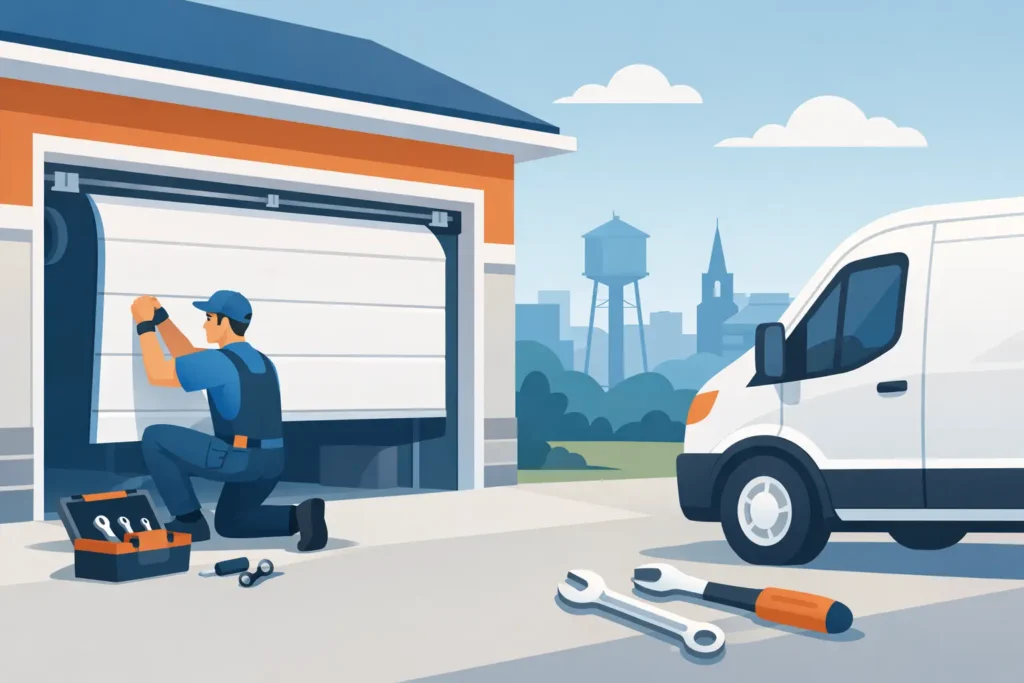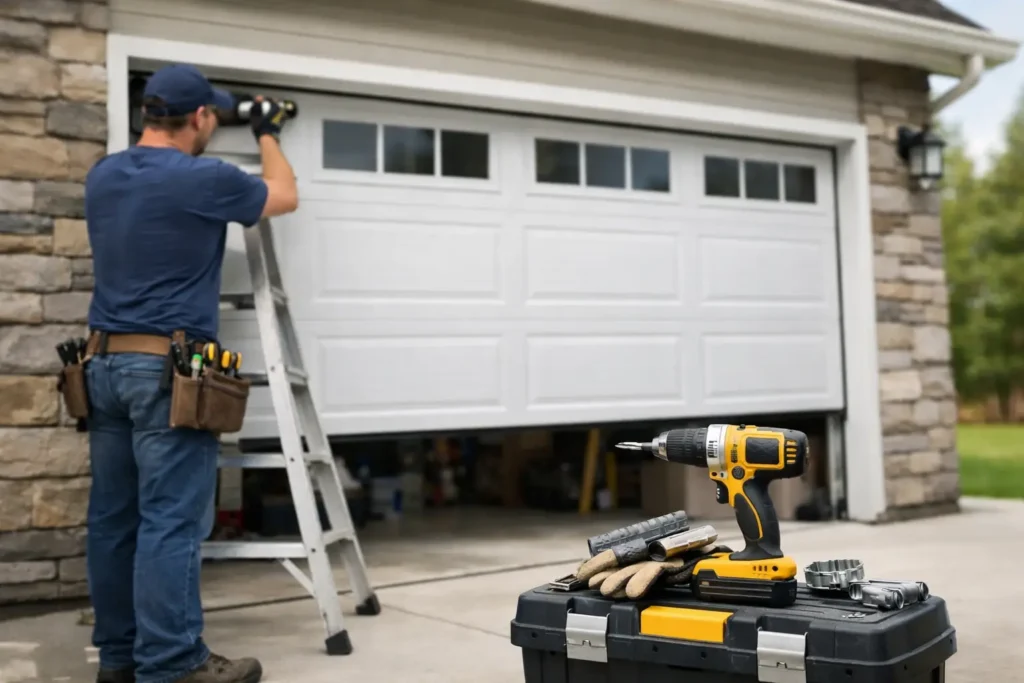
A garage door that starts down, stops, and reverses for no clear reason usually is not “just acting up.” In many cases, you need garage door sensor alignment help because the safety eyes near the floor are no longer pointing at each other the way they should. That small problem can keep the door from closing, leave your home unsecured, and create a real safety issue if the system is bypassed or ignored.
The good news is that sensor alignment problems are often straightforward. The catch is that not every sensor issue is actually an alignment issue. Dirt on the lens, loose wiring, vibration from daily use, bent tracks, and failing components can all look similar at first. Knowing the difference saves time and helps you avoid forcing a garage door system that is trying to tell you something is wrong.
What garage door sensors are supposed to do
Your garage door sensors are a built-in safety feature. One sensor sends an invisible beam across the bottom of the door opening, and the other sensor receives it. If that beam is blocked or interrupted, the opener should stop the door from closing or reverse it.
That is why sensor trouble usually shows up in a very specific way. The door may open normally but refuse to close unless you hold the wall button down. It may begin to close and then reverse. You may also notice blinking opener lights or one sensor light that is out or flickering.
When the system works correctly, it protects kids, pets, vehicles, and anything else in the door’s path. When it is misaligned, the opener reads that as an unsafe condition. That is annoying when you are trying to leave for work, but it is still the system doing its job.
Signs you need garage door sensor alignment help
The most common sign is inconsistency. One day the door closes fine. The next day it reverses halfway down. That kind of stop-and-start behavior often points to sensors that are barely lined up and lose the beam when the track shakes or the temperature changes.
You should also pay attention to the indicator lights on the sensors themselves. On many models, one light stays solid when power is present, and the other stays solid only when alignment is correct. If one light is blinking, dim, or completely dark, that gives you a clue. A blinking light often means misalignment. A dark light may mean lost power, a wire problem, or a failed sensor.
Another clue is physical movement. If a sensor bracket has been bumped by a trash can, a bike tire, a snow shovel, or even normal garage storage activity, it may be slightly off. In Ohio garages, seasonal clutter and winter equipment often end up close to the door opening, and that makes these sensors easy to knock out of position.
Why sensor alignment goes off
Garage door sensors sit low to the ground, which makes them vulnerable. They can get bumped, loosen over time, or shift because of vibration every time the door opens and closes. On some systems, even a small change in angle is enough to break the beam.
Weather can play a role too. In colder months, garages in this part of Ohio deal with freeze-thaw cycles, dampness, and dirt tracked in from driveways. Moisture and grime do not always destroy a sensor, but they can reduce performance or make a small alignment issue worse.
There is also the possibility that the sensors are not the real problem. A sagging bracket, track movement, damaged wire insulation, or a worn opener logic board can mimic bad alignment. That is where a simple visual check helps. If the sensor looks square, the lens is clean, and the light still will not hold steady, the issue may go beyond alignment.
A safe way to check the sensors yourself
If you want to do a basic inspection, start with safety. Do not touch springs, cables, or any tension components. Sensor troubleshooting is one of the few garage door tasks homeowners can sometimes check without major risk, but the rest of the system is not a DIY project.
Start by looking at both sensors near the bottom of the door tracks. Make sure nothing is blocking the beam, including leaves, tools, mud, or stored items. Wipe each lens gently with a soft cloth. Dirt alone can sometimes cause the problem.
Next, look at the brackets. If one sensor is visibly tilted up, down, or sideways, it may have been knocked loose. You can check whether both sensors appear to face each other directly at the same height. If one is lower or twisted, the opener may not be getting a clean signal.
Then check the lights. If both lights are on and steady, the sensors may be aligned, and the problem may be somewhere else. If one light is blinking, alignment is still a strong possibility. If one is off, look for obvious wiring damage before assuming the sensor itself has failed.
How alignment is usually corrected
Most sensor alignment corrections come down to small adjustments, not major movement. The sensor bracket is loosened slightly, the sensor is repositioned until the indicator light turns solid, and then the bracket is tightened carefully so it does not shift again.
That sounds simple, and sometimes it is. But there is a difference between getting the light to turn on and getting the sensor to stay aligned after the door cycles several times. A bracket that is bent, weak, or mounted to a shifting surface may look fixed for five minutes and fail again by the end of the day.
The same goes for track-related issues. If the sensor is attached to a track that has been bumped out of position, the symptom may keep coming back until the underlying hardware problem is corrected. That is why repeat sensor trouble often points to a bigger service need.
When garage door sensor alignment help should come from a pro
If the door still will not close after cleaning the lenses and checking for obvious misalignment, it is time to stop guessing. The same applies if the sensor lights will not come on, the wiring looks damaged, or the brackets will not hold position.
Professional service is also the right move if the door has other symptoms at the same time. If the track is bent, the opener is straining, the door is uneven, or you hear grinding and popping, the sensors may be only one part of the problem. A trained technician can tell whether you are dealing with a simple alignment issue or a larger safety concern.
For homeowners and property managers, this matters because a door that will not close reliably is more than an inconvenience. It affects security, daily access, and trust in the whole system. Certified technicians can test the sensors, wiring, opener response, and door balance as one system instead of treating the symptom in isolation.
What not to do when sensors act up
The biggest mistake is trying to force the door closed and calling it fixed. Holding the wall button down may override the safety feature on some openers, but that is a temporary emergency measure, not a repair. If the door closes only when you override the sensors, the system still has a fault.
Another mistake is bending brackets aggressively or splicing wires without proper diagnosis. A quick fix can turn into a repeat service issue, especially if the real cause is vibration, corrosion, or opener trouble. You do not want a door that works only until the next cold morning.
It is also smart to avoid replacing parts at random. Sensors, wiring, and opener boards all cost time and effort to troubleshoot. If the diagnosis is wrong, you still have the same problem plus a new part that was never needed.
Preventing sensor problems from coming back
A little routine attention goes a long way. Keep the lower part of the garage door opening clear so the sensors do not get bumped. If you sweep out the garage, wipe the lenses while you are there. That simple step can prevent a lot of false reversals.
Watch for signs of loose hardware too. If the brackets or tracks seem to shift, that should be checked before it turns into a recurring alignment problem. In garages that see a lot of vehicle traffic, kids’ bikes, lawn equipment, or commercial use, low-mounted components take more abuse than people realize.
Regular maintenance helps because it catches the issues around the sensors, not just the sensors themselves. A professional inspection can spot mounting problems, wire wear, opener response issues, and door movement that puts extra stress on the safety system.
If your garage door is reversing, blinking, or refusing to close, trust what the system is telling you. Sensor trouble is often fixable, but safe, reliable operation depends on getting the diagnosis right. When a quick adjustment does not solve it, the smartest next step is to have the whole door system checked so you can get back to using it with confidence.