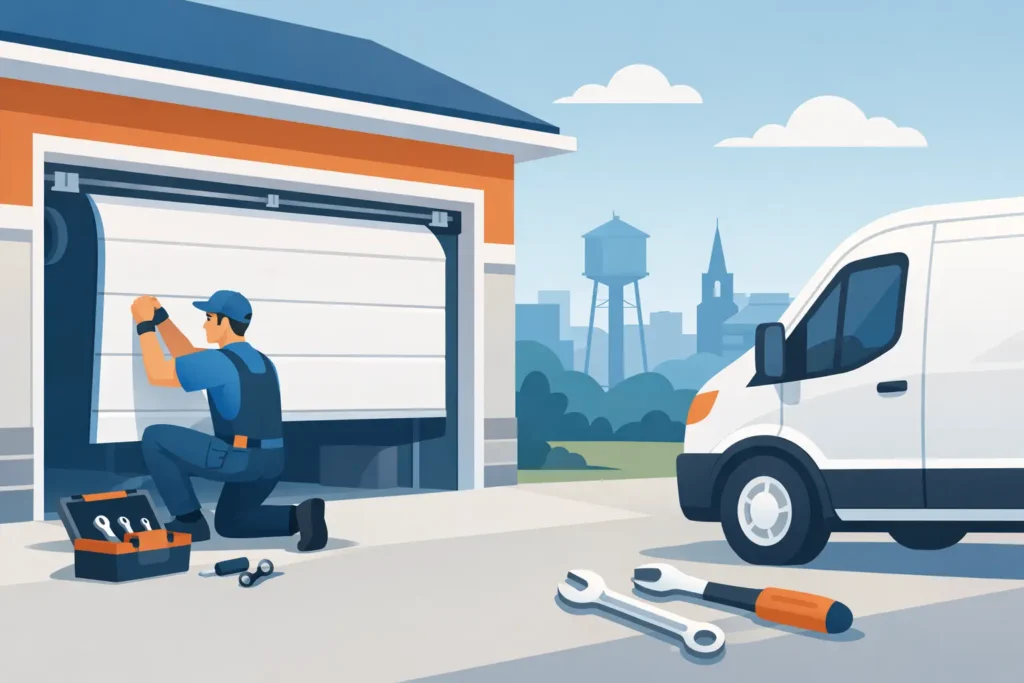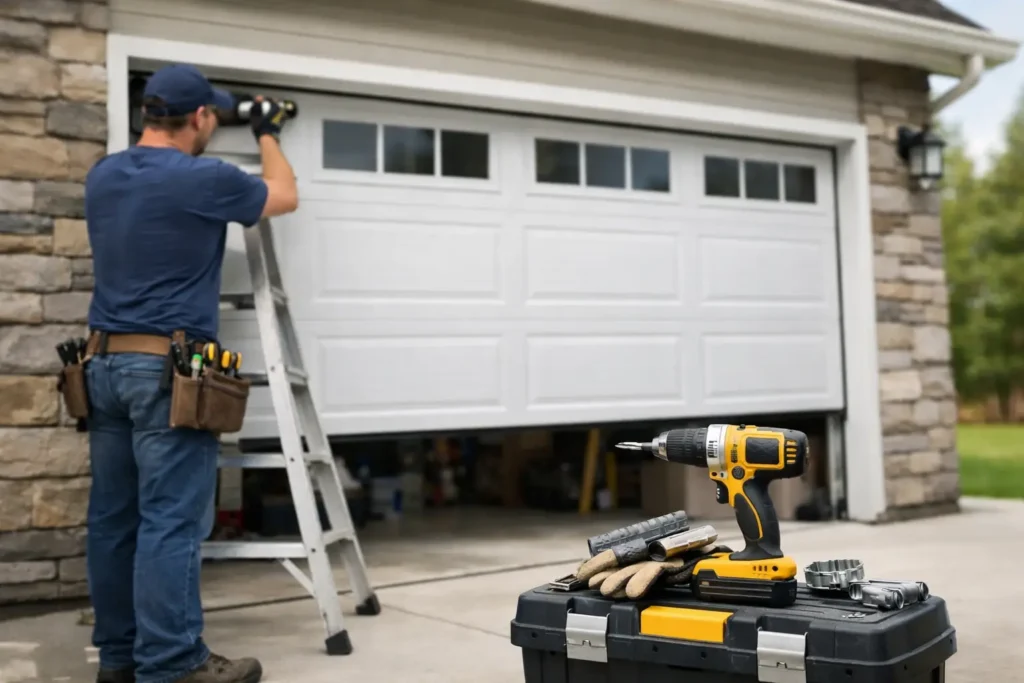
The power goes out, your opener stops responding, and suddenly your car is trapped inside. That is usually the moment people ask, how does a garage door emergency release work? The short answer is simple: it disconnects the garage door from the opener so you can move the door by hand. The part that matters most is knowing when that is safe, when it is not, and what to do next.
Most homeowners have seen the red cord hanging from the opener rail. Fewer know what it actually does inside the system. And that matters, because using the emergency release the wrong way – especially with a broken spring or a door stuck halfway open – can turn a frustrating problem into a dangerous one fast.
How does a garage door emergency release work in plain terms?
A garage door opener does not lift the full weight of the door by itself. The opener guides the movement, while the spring system does the heavy lifting. The emergency release is the manual disconnect between those two parts.
When you pull the red handle or cord, it releases the trolley from the opener carriage. Once that connection is broken, the opener can no longer push or pull the door. That lets you raise or lower the door manually.
Think of it as putting the opener in neutral. The motor is still there, the rail is still there, and the door is still on its tracks, but the opener is no longer controlling the movement. That is why the cord is so useful during a power outage or opener failure. It gives you a way to operate the door without electricity.
What actually happens when you pull the red cord?
Inside the opener rail, a trolley travels back and forth as the motor runs. That trolley is what connects the opener arm to the garage door. The emergency release cord is attached to a lever on that trolley.
When you pull the cord, the lever disengages the trolley. Once released, the trolley separates from the opener drive mechanism, and the door can move independently. On many systems, you will hear or feel a click when this happens.
After that, you should be able to lift the door manually if the door is balanced properly and the springs are working the way they should. If the door feels extremely heavy, slams shut, or will not stay open, stop right there. That usually points to a broken spring or another mechanical problem, and that is not a safe DIY situation.
When should you use the emergency release?
The most common reason is a power outage. If the opener has no power, the emergency release allows you to open the door so you can get a vehicle out or secure the garage.
It can also help if the opener motor fails, the wall button stops working, the remote will not activate the unit, or the system is malfunctioning and you need to move the door manually. In some cases, technicians use the release during inspections or repairs to separate opener issues from door issues.
That said, it depends on the condition of the door. If the door is fully closed and appears normal, using the release is usually straightforward. If the door is open, crooked, off track, making grinding sounds, or unusually heavy, using the release can be risky. A damaged door can move suddenly once the opener is no longer holding it in place.
When you should not pull the emergency release
This is where a lot of homeowners get into trouble. The red cord is not dangerous by itself, but the condition of the door may be.
If you suspect a broken spring, do not pull the release with the door in the open position. Springs counterbalance the weight of the door. Without that support, a garage door can drop hard. On a double-wide steel door, that can mean hundreds of pounds moving fast.
You should also avoid using the emergency release if the door is off track, one side is hanging lower than the other, rollers are damaged, or cables look loose or frayed. In those cases, manual operation can make the damage worse or create a serious injury risk.
A good rule is this: if the door looks unstable, sounds wrong, or feels heavier than normal, leave it alone and call a trained garage door technician.
How to use it safely
If the door is closed and there are no obvious signs of damage, using the emergency release is usually simple. Make sure the area is clear. Stand inside the garage. Pull the red cord firmly, but do not yank it aggressively. That should disconnect the trolley.
Then lift the door slowly with both hands. A properly balanced door should move with controlled resistance. It should not feel like dead weight. If it is hard to lift, do not force it.
If you need to close the door manually, lower it carefully and keep your hands away from pinch points between sections. Once the door is closed, lock it if needed, since the opener is no longer securing it the same way.
For homeowners in Ohio, weather can add another variable. Cold snaps can stiffen rollers, affect lubrication, and make existing spring issues show up fast. If the door is sticking during winter conditions, do not assume it is just the weather. Sometimes the cold exposes a problem that was already developing.
How to reconnect the garage door after using the release
Once power is restored or the opener issue is resolved, the door has to be reattached to the trolley. On many openers, you can do that by moving the door until the trolley clicks back into place. On others, you reconnect the release lever first and then run the opener until it engages.
The exact method depends on the opener brand and model, but the basic idea is the same. The manual disconnect has to be reset so the opener can control the door again.
If the opener runs but the door does not move, the trolley may still be disengaged. If you try to reconnect it and the door jerks, binds, or reverses, stop and have the system checked. Reconnection problems sometimes point to opener travel issues, bent hardware, or door balance trouble.
Why the emergency release does not fix the real problem
The emergency release is a temporary function, not a repair. It lets you operate the door manually, but it does not solve whatever caused the opener to stop working in the first place.
Sometimes the issue is minor, like a dead remote battery or a tripped outlet. Other times it is a failed opener gear, worn trolley, broken spring, damaged cable, sensor issue, or door that has come out of alignment. A homeowner may only notice that the opener stopped responding, but the root problem can be mechanical, not electrical.
That is why a garage door that suddenly needs the emergency release more than once deserves a professional inspection. Repeated manual operation is often a sign that something in the system is failing.
Common questions homeowners have about the release cord
One concern is whether pulling the cord will damage the opener. Under normal conditions, no. It is designed for that purpose. The problem is not the release itself. The problem is using it on a door that is unsafe to move manually.
Another common question is whether every garage door has one. Most automatic opener systems do, especially in residential settings. If you do not see a red cord, the opener may be missing the handle, or the setup may be unusual and worth checking during service.
People also ask if they can leave the door disconnected. You can for a short time if necessary, but it is not ideal. A disconnected door is easier to move manually, which can affect security, and you lose the convenience and control of the opener.
When it is time to call for professional help
If the emergency release worked and the door moved smoothly, you may simply need to reconnect the opener and move on. But if the door felt heavy, would not stay open, made loud noises, or looked uneven, it is time for service.
The same is true if the red cord was pulled and now the opener will not reengage, or if the system works intermittently. Those are the kinds of issues trained technicians deal with every day, and they are often tied to parts homeowners should not handle on their own, especially springs and cables under tension.
For homeowners in Wapakoneta and nearby communities, fast service matters most when the door is stuck open, trapped shut, or acting unsafe. A good garage door company will not just get it moving again. They will check the full system, confirm safe operation, and make sure the opener, spring assembly, and door balance all work together the way they should.
The red cord is there to help you in a pinch, not to ask you to become your own garage door technician. If the door moves normally, use it carefully. If anything feels off, trust that instinct and get expert help before a temporary inconvenience becomes a safety problem.