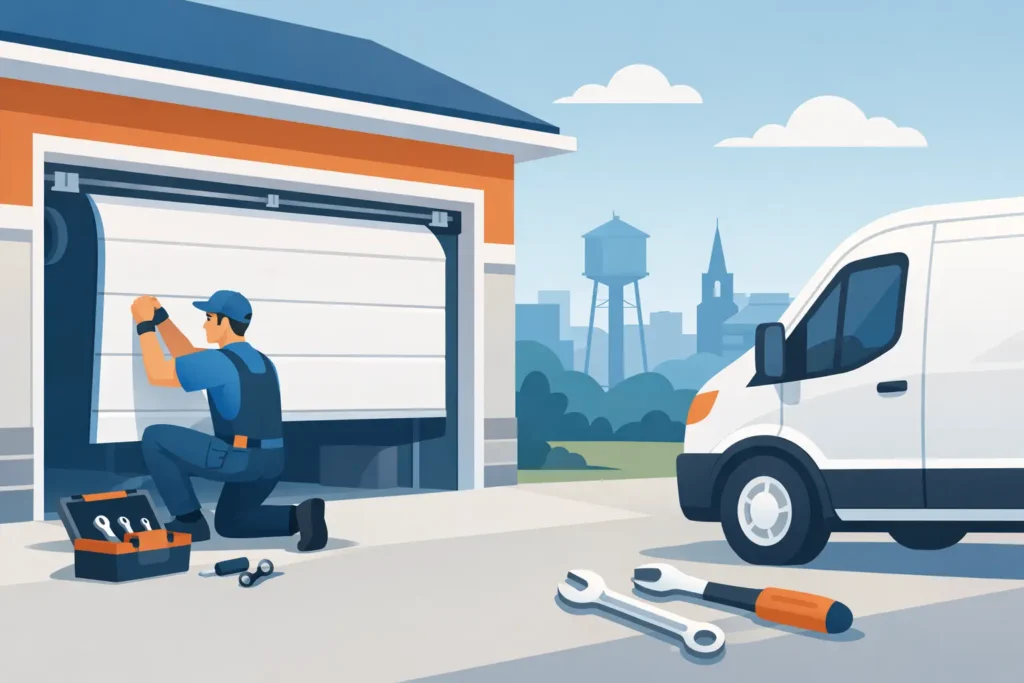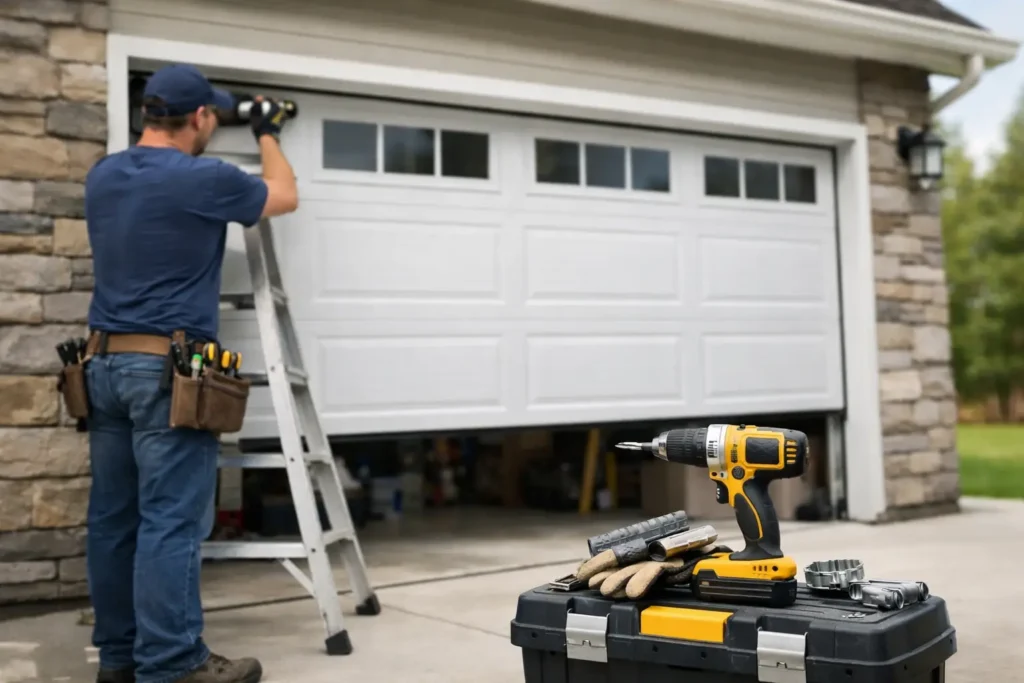
One morning the garage door works like normal. That evening, it refuses to close, reverses halfway down, or just hums and goes nowhere. That is exactly when a solid garage opener troubleshooting guide helps – not to turn you into a technician, but to help you separate a simple fix from a problem that needs fast professional service.
Garage door openers fail in a few predictable ways. The remote may stop responding. The wall button may work while the remote does not. The motor may run, but the door does not move. Sometimes the door starts down and pops right back up. Other times, the opener seems like the problem when the real issue is the door itself, the springs, the track, or the safety sensors.
Start with the safest checks first
Before touching anything, stand inside the garage with the door fully visible. Watch and listen. A grinding sound, a jerking movement, or a door that looks crooked tells you more than most homeowners realize.
If the opener has power but the door is heavy, uneven, or stuck in place, stop there. An opener is only one part of the system. A broken spring, damaged roller, bent track, or jammed section can overload the motor fast. Forcing it can turn a repairable issue into a larger one.
The safest first step is always the simplest one. Confirm the opener is plugged in, check whether a GFCI outlet has tripped, and make sure the breaker is on. It sounds basic, but power issues are common, especially after storms, outlet resets, or seasonal electrical hiccups.
Next, check the remote. If the wall button works but the remote does not, the battery is the first suspect. If neither control works consistently, the problem may be with power, logic board communication, or a lock feature that was turned on by accident.
Garage opener troubleshooting guide for the most common problems
The opener has power but nothing happens
If the opener lights come on but the motor does not respond to the wall control or remote, start with the wall console. Some systems have a vacation lock or lock mode that disables remote access. Homeowners sometimes trigger this without realizing it.
If the lock is off and the unit still does nothing, there may be an issue with the logic board, wiring, or internal motor components. That is usually not a DIY fix. Electrical diagnosis inside the opener requires the right tools and experience, especially if the unit has intermittent response instead of total failure.
The remote works sometimes, but not reliably
This often points to signal interference, weak batteries, or an antenna issue. Replace the battery first. Then look at the opener’s hanging antenna wire. If it is tucked up, damaged, or blocked by storage, the range can drop.
There are cases where LED bulbs in the garage create radio interference with older opener systems. That is one of those odd problems that sounds unlikely until you see it in the field. If the remote range got worse after bulb replacement, that clue matters.
The motor runs, but the door does not move
If you hear the opener running but the door stays put, the emergency release may have been disconnected, or the drive system may be worn or broken. On some openers, a stripped gear can let the motor run without transferring motion to the door.
You can check whether the trolley is engaged, but do not keep cycling the opener to test it. Repeated attempts can wear the unit further, especially if something else is binding in the system.
The garage door starts down, then reverses
This is one of the most common service calls because modern openers are built to reverse when they sense resistance or a safety issue. Start with the photo-eye sensors near the bottom of the tracks. If they are dirty, bumped out of alignment, or blocked by debris, the opener may refuse to close properly.
Wipe the sensor lenses and confirm both sides are facing each other. Most units have indicator lights that help show alignment. If the sensors look fine and the door still reverses, the opener’s force settings, travel limits, or the door’s physical movement may be the real issue.
A door that is too heavy from a failing spring can also trigger reversal. In that case, the opener is doing its job by stopping an unsafe movement.
The door will not open all the way
When a door stops short, hesitates, or travels unevenly, the opener limits may be off, but the cause is not always inside the opener. Ohio weather can affect door components more than people expect. Cold temperatures can stiffen rollers, harden grease, and expose weak springs or worn bearings.
If the travel problem appears suddenly, inspect the tracks for obstructions and look for rollers that are no longer moving smoothly. If the door binds in one section every time, that points to a mechanical issue more than an opener programming problem.
When the opener is not the real problem
A lot of calls that start as opener complaints turn out to be door balance or hardware problems. That matters because replacing an opener will not fix a broken spring or a failing roller system.
Here is the quick homeowner test. Pull the emergency release only when the door is fully closed and it is safe to do so. Then try lifting the door by hand. It should move smoothly and feel reasonably balanced. If it is extremely heavy, slams shut, or will not stay in place, stop using the opener and call for service.
That test can reveal a spring issue fast. Springs carry the door’s weight. The opener only guides the motion. When a spring breaks or weakens, the opener strains to do a job it was never designed to handle.
What you can safely check and what you should leave alone
Homeowners can safely check power, batteries, visible sensor alignment, and obvious obstructions in the track area. They can also observe whether the door looks level and whether the opener lights or indicators are acting normally.
What should be left to trained technicians is just as important. Springs, cables, bottom brackets, and major opener internals are not safe DIY territory. High-tension components can cause serious injury in a split second. Even something that looks minor, like a loose cable on one side, can signal a dangerous imbalance.
The same applies to opener adjustments when the real cause is unclear. Travel and force settings are not guesswork. If they are changed to overpower a sticking door, the system may become less safe, not more reliable.
Signs you should schedule professional opener service now
If the opener hums but will not lift, the door is crooked, the unit smells hot, or the door reverses without a clear sensor issue, it is time to stop troubleshooting and book service. The same is true if the opener is older and has become increasingly unreliable over the last few months.
Intermittent failure is often a warning sign before full breakdown. That matters for homeowners who rely on the garage as the main entry point, and for property managers who need dependable access and security.
A trained technician can tell whether the issue is the motor, the drive, the board, the safety system, or the door hardware around it. That saves time and prevents the common mistake of replacing the wrong component.
A better way to use this garage opener troubleshooting guide
The real value of a garage opener troubleshooting guide is not doing every repair yourself. It is knowing what the symptoms mean, what is safe to inspect, and when expert help is the right call.
If your opener problem is clearly a dead battery or a blocked sensor, that is good news. If the door is heavy, noisy, uneven, or reversing for no clear reason, do not keep testing it. That extra strain can damage the opener, the door, or both.
For homeowners in Wapakoneta and nearby areas, fast garage door service matters most when the system is unreliable at the exact moment you need to leave for work, secure the house, or protect stored equipment from the weather. A dependable repair is not just about convenience. It is about safety, security, and getting the whole door system back to working the way it should.
When your opener starts acting up, trust what the door is telling you. A quick check is smart. Pushing a failing system past its limit is not.